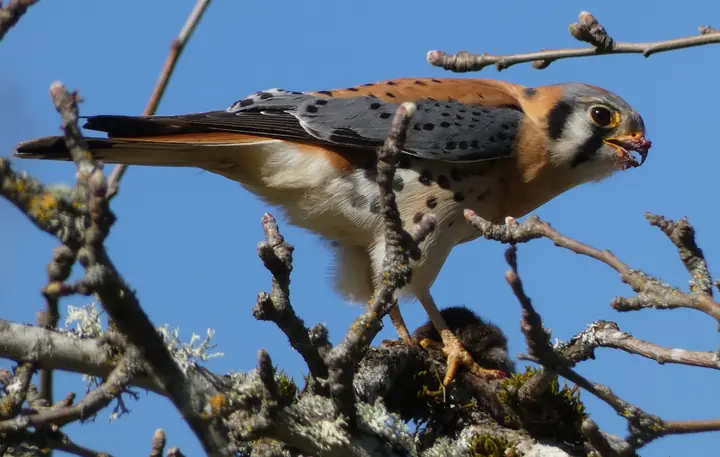
American Kestrel
Falco sparverius · Falcons and Caracaras
Banding codeAMKE
Keys to identifying it
1Size & shape
About 10 in long.
2Color pattern
- Small falcon with two black facial stripes
- Rusty back and tail
- Male has blue-gray wings
3Habitat & season
Open country, fields, wires along roads
In northern Utah: year-round.
Seen most often in December, January and February.
Share of the region’s research-grade iNaturalist bird observations each month, scaled to this bird’s peak. Highlighted bars are its peak months.
4Voice
Shrill, rapid 'klee' calls.
“klee-klee-klee”
iNat 100324241 by Jennifer Rycenga · San Bruno Mountain State Park, South San Francisco, CA, US · CC BY
Know it
- North America's smallest falcon.
- Hovers in place facing into the wind while hunting.
- Has dark 'false eyes' on the back of its head.
- Nests in tree cavities, old woodpecker holes and nest boxes.
Often confused with
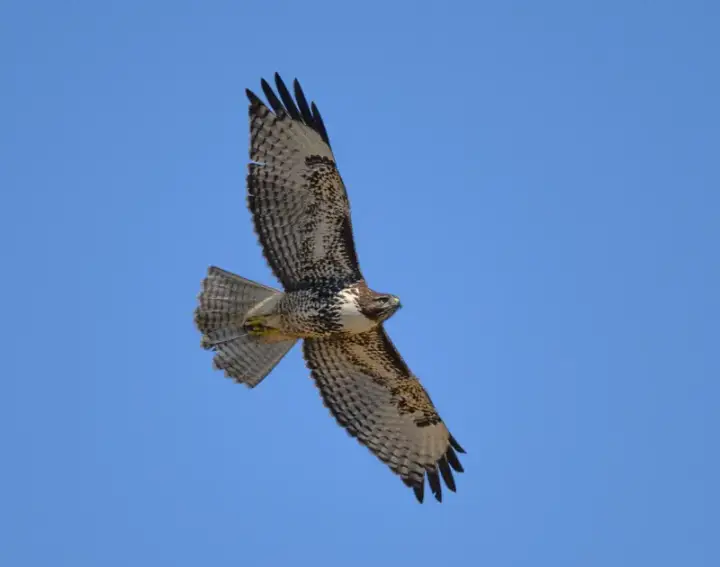 Red-tailed Hawk
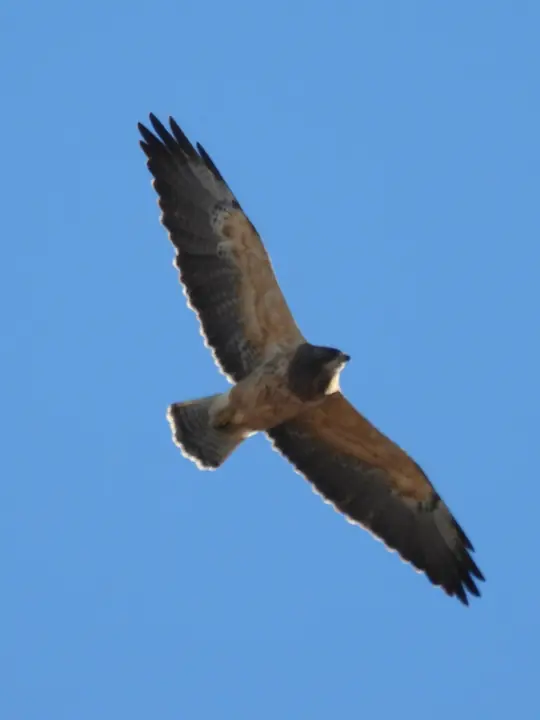 Swainson's Hawk
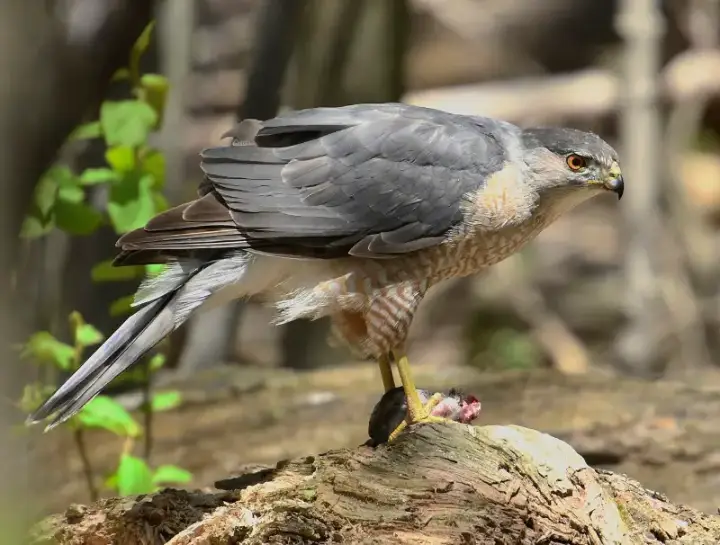 Cooper's Hawk
- Prairie Falcon
From iNaturalist identification data for northern Utah.
From Wikipedia
The American kestrel is the smallest and most common falcon in the Americas. Though it has been called the American "sparrow hawk", this now obsolete vernacular name is a misnomer; the American kestrel is a true falcon, while neither the Eurasian sparrowhawk nor the other species called sparrowhawks are in the family Falconidae, hence only very distantly related to the American kestrel. It has a roughly two-to-one range in size over subspecies and sex, varying in size from about the weight of a blue jay to a mourning dove. It is a very successful species, occurring almost throughout North and South America except for the Arctic fringes of North America, and the densest tropical Amazon rainforest areas; it has evolved into 17 subspecies adapted to different environments and habitats throughout the region. It exhibits sexual dimorphism in size and plumage, although both sexes have a rufous back with noticeable barring. Its plumage is colorful, and juveniles are similar in plumage to adults.
Wikipedia · CC BY-SA 4.0