Double-crested Cormorant
Nannopterum auritum · Cormorants and Shags
Banding codeDCCO
Keys to identifying it
1Size & shape
About 32 in long.
2Color pattern
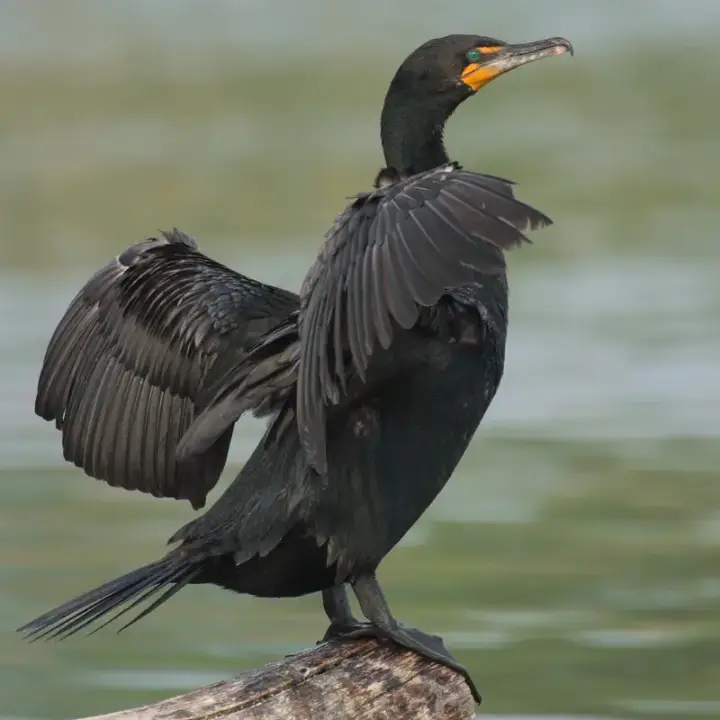
- Black with orange-yellow skin at the base of the bill
- Hooked bill
- Often perches with wings spread
3Habitat & season
Reservoirs, rivers, Great Salt Lake islands
In northern Utah: summer.
Seen most often in March, April, May, June and September.
Share of the region’s research-grade iNaturalist bird observations each month, scaled to this bird’s peak. Highlighted bars are its peak months.
4Voice
Mostly silent; grunts at colonies.
“low grunts at the nest”
iNat 335118148 by Guy Babineau · Albemarle County, US-VA, US · CC BY
Know it
- Perches with wings spread to dry, because its feathers soak up water as it dives.
- The 'double crest' is a pair of small tufts seen only in breeding season.
- Swims low, often with only its head and neck above water.
- Nests in colonies on islands and in dead trees.
Often confused with
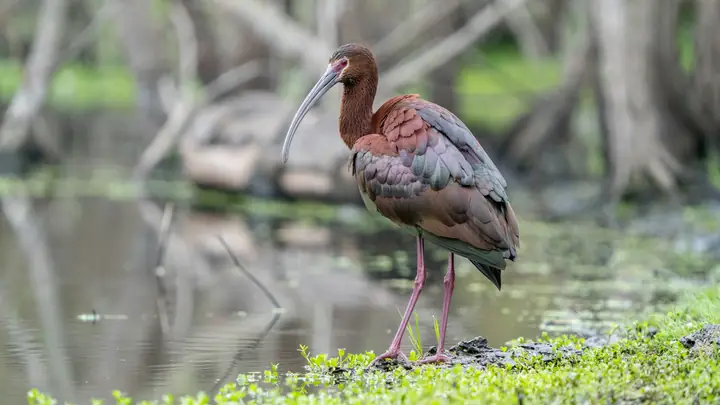 White-faced Ibis
 Cinnamon Teal
- Neotropic Cormorant
- European Shag
From iNaturalist identification data for northern Utah.
From Wikipedia
The double-crested cormorant is a member of the cormorant family of water birds. It is found near rivers and lakes and in coastal areas and is widely distributed across North America, from the Aleutian Islands in Alaska down to Florida and Mexico. Measuring 70–90 cm (28–35 in) in length, it is entirely black except for a bare patch of orange-yellow facial skin and some extra plumage that it exhibits in the breeding season when it grows a double crest in which black feathers are mingled with white. Five subspecies are recognized. It mainly eats fish and hunts by swimming and diving. Its feathers, like all cormorants, are not waterproof, and it must dry them out after spending time in the water. Once threatened by the use of DDT, the numbers of this bird have increased markedly in recent years.
Wikipedia · CC BY-SA 4.0