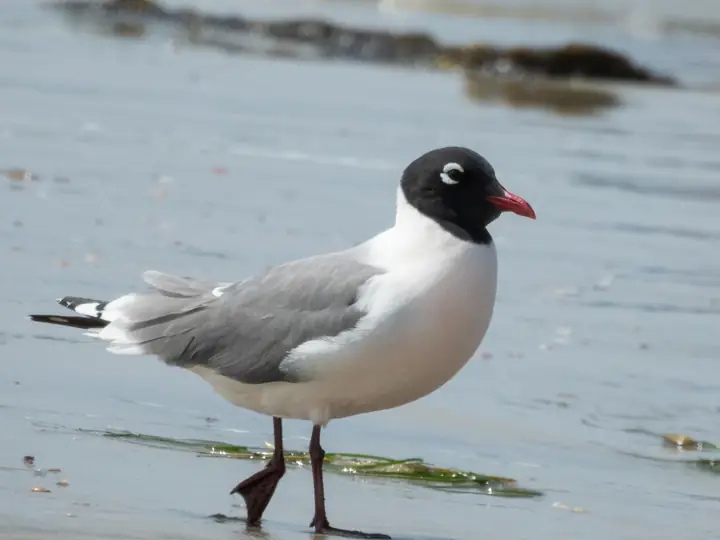
Franklin's Gull
Leucophaeus pipixcan · Gulls, Terns, and Skimmers
Banding codeFRGU
Keys to identifying it
1Size & shape
About 14 in long.
2Color pattern
- Small gull with a black hood (breeding)
- Bold white arcs above and below the eye
- Dark gray back
3Habitat & season
Large marshes, flooded fields, farm fields
In northern Utah: summer.
Seen most often in July and August.
Share of the region’s research-grade iNaturalist bird observations each month, scaled to this bird’s peak. Highlighted bars are its peak months.
4Voice
Nasal, laughing calls.
“a soft, nasal 'kuk'”
iNat 363204838 by Robert Hoard · Cheyenne Township, KS, USA · CC BY
Know it
- Nests on floating mats in large marshes and winters along South America's Pacific coast.
- Follows tractors to snatch insects stirred up in fields.
- Breeding adults can show a rosy pink blush on the breast.
- Named for Sir John Franklin, the Arctic explorer.
Often confused with
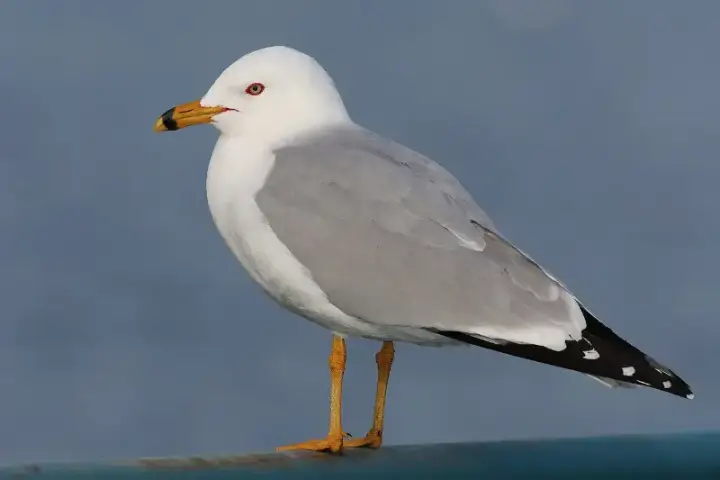 Ring-billed Gull
- Bonaparte's Gull
- Common Gull
From iNaturalist identification data for northern Utah.
From Wikipedia
Franklin's gull is a small gull. The genus name Leucophaeus is from Ancient Greek leukos, "white", and phaios, "dusky". The specific pipixcan is a Nahuatl name for a type of gull. The English common name was given to commemorate the arctic explorer Sir John Franklin, who led an expedition in 1825 on which the type was collected.
Wikipedia · CC BY-SA 4.0