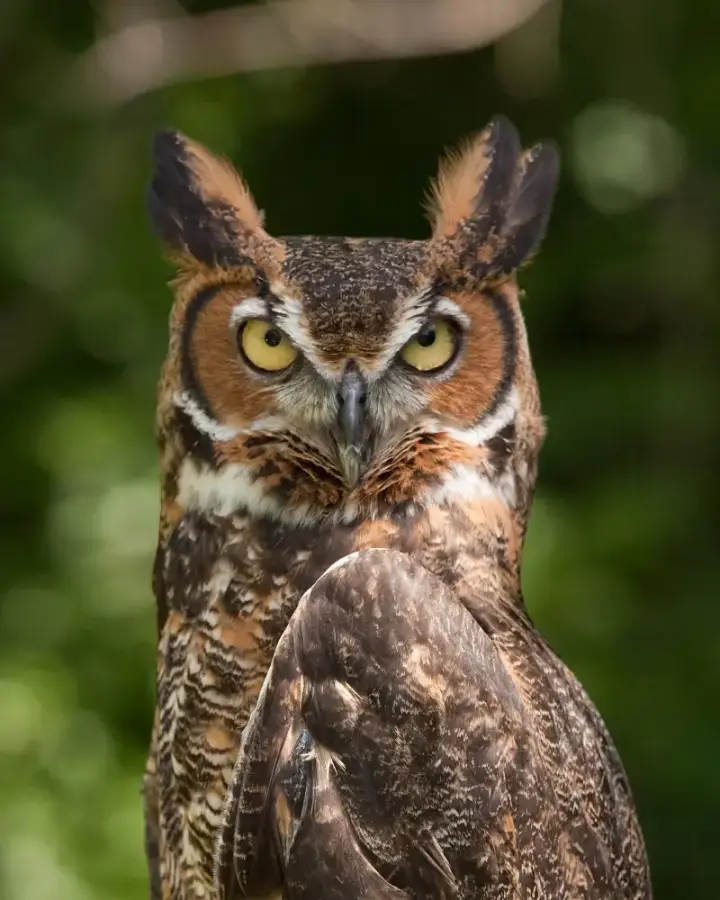
Great Horned Owl
Bubo virginianus · Typical Owls
Banding codeGHOW
Keys to identifying it
1Size & shape
About 22 in long.
2Color pattern
- Large owl with feathery ear tufts
- Yellow eyes and a white throat patch
- Mottled gray-brown with a barred belly
3Habitat & season
Canyons, cottonwood groves, city parks
In northern Utah: year-round.
Seen most often in January, February, March, June, August, September, October and November.
Share of the region’s research-grade iNaturalist bird observations each month, scaled to this bird’s peak. Highlighted bars are its peak months.
4Voice
Deep, soft hoots in a rhythmic pattern.
“hoo-h'HOO-hoo-hoo”
iNat 313013465 by John Williams · Pleasant Grove, UT, USA · CC0
Know it
- One of the earliest nesters — Utah pairs may lay eggs in January or February.
- Its 'horns' are just feather tufts, not ears.
- Its grip takes about 28 pounds of force to open.
- Regularly eats skunks — it has a poor sense of smell.
Often confused with
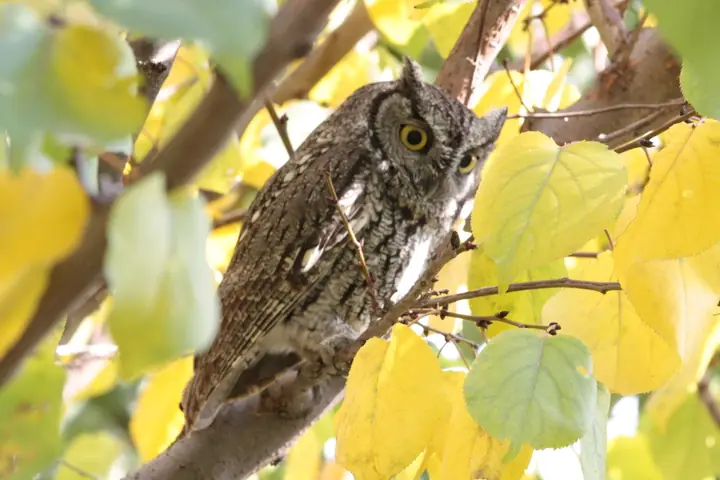 Western Screech-Owl
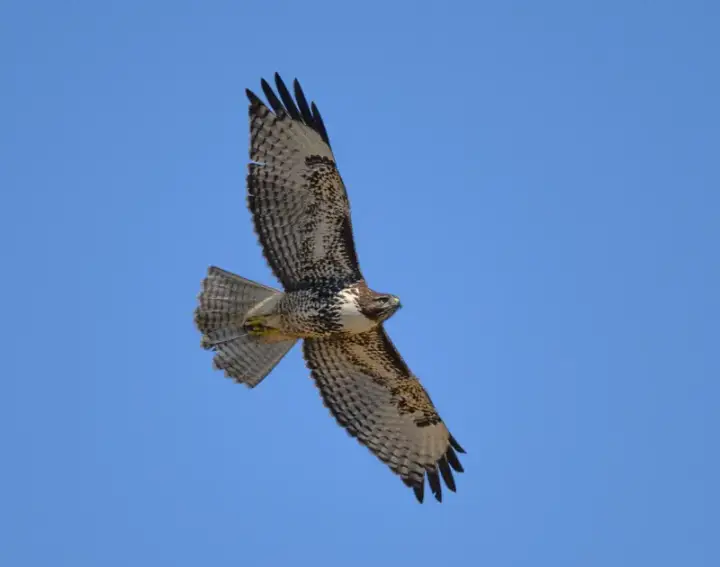 Red-tailed Hawk
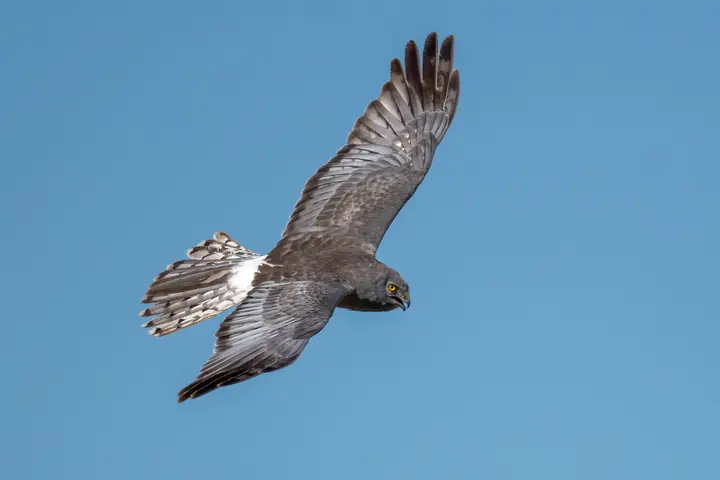 Northern Harrier
- Long-eared Owl
- American Barn Owl
From iNaturalist identification data for northern Utah.
From Wikipedia
The great horned owl, also known as the tiger owl or the hoot owl, is a large owl native to the Americas. It is an extremely adaptable bird with a vast range and is the most widely distributed true owl in the Americas. Its diet consists primarily of rabbits and hares, rats and mice, and voles; it remains one of the few regular predators of skunk. Hunting also includes rodents, larger mid-sized mammals, birds, reptiles, amphibians, and invertebrates.
Wikipedia · CC BY-SA 4.0