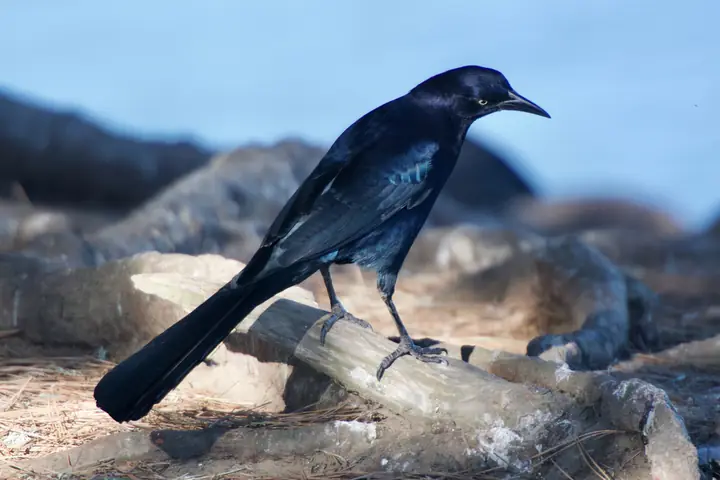
Great-tailed Grackle
Quiscalus mexicanus · New World Blackbirds and Orioles
Banding codeGTGR
Keys to identifying it
1Size & shape
About 17 in long.
2Color pattern
- Male: glossy purple-black with a huge keel-shaped tail
- Bright yellow eye
- Female: brown with a smaller tail
3Habitat & season
Parks, parking lots, marsh edges
In northern Utah: year-round.
Seen most often in November.
Share of the region’s research-grade iNaturalist bird observations each month, scaled to this bird’s peak. Highlighted bars are its peak months.
4Voice
Loud whistles, clacks and machine-like rattles.
“a loud, rising 'wheeeek' and clacks”
iNat 345207733 by Daughter Dad · Grandpa's pond, Sandy, UT 84070, USA · CC BY
Know it
- Has spread north from Texas and now nests in Utah.
- The male holds his long tail folded into a V-shaped keel.
- Its calls include clicks, rattles and piercing whistles.
Often confused with
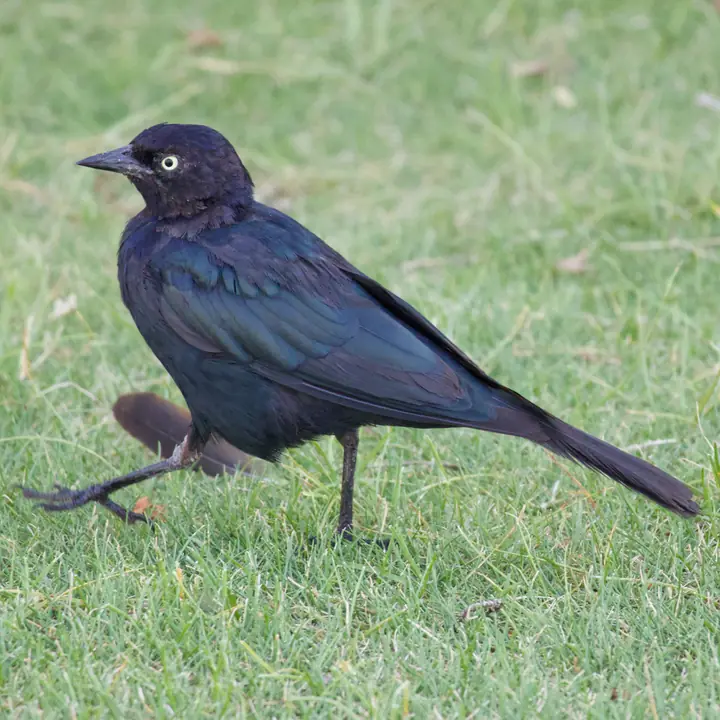 Brewer's Blackbird
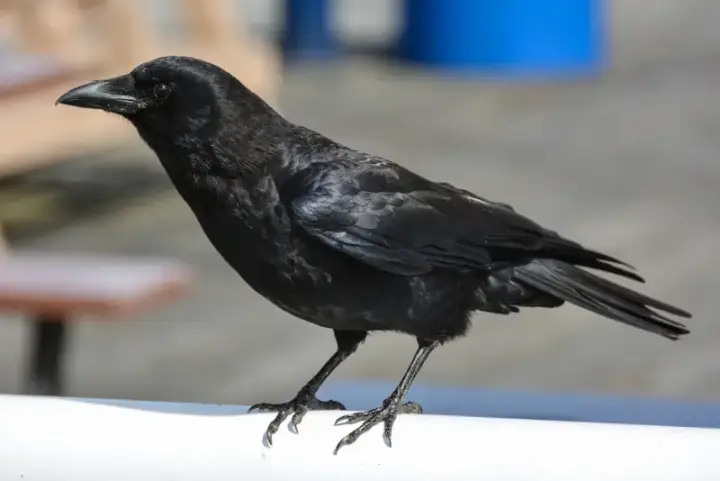 American Crow
- Common Grackle
- Boat-tailed Grackle
From iNaturalist identification data for northern Utah.
From Wikipedia
The great-tailed grackle or Mexican grackle is a medium-sized, highly social passerine bird native to North and South America. A member of the family Icteridae, it is one of 10 extant species of grackle and is closely related to the boat-tailed grackle and the extinct slender-billed grackle. In the southern and southwestern United States, the grackle is sometimes referred to simply as a "blackbird" or (erroneously) a "crow" due to its glossy black plumage; however, grackles form their own unique genus that is separate from other "blackbirds", such as the red-winged and Brewer's blackbirds, despite being in the same family (Icteridae). Superficially, Brewer's blackbird is one of the most visually similar species to grackles.
Wikipedia · CC BY-SA 4.0