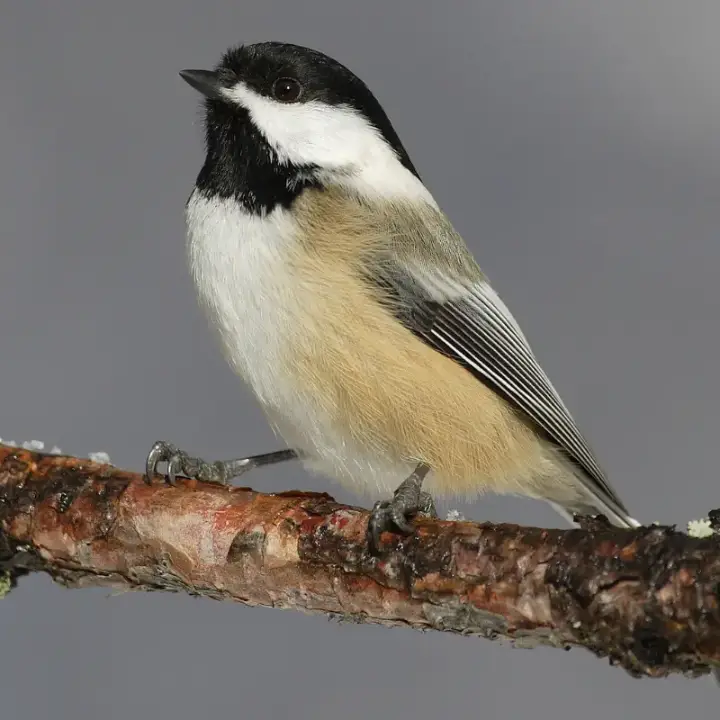
Black-capped Chickadee
Poecile atricapillus · Tits, Chickadees, and Titmice
Banding codeBCCH
Keys to identifying it
1Size & shape
About 5.3 in long.
2Color pattern
- Black cap and bib
- Bright white cheeks
- Soft gray back with buffy sides
3Habitat & season
Riparian woods, parks, shade trees
In northern Utah: year-round.
Seen most often in October, November, December, January, February and March.
Share of the region’s research-grade iNaturalist bird observations each month, scaled to this bird’s peak. Highlighted bars are its peak months.
4Voice
A clear two-note whistle; the namesake 'chick-a-dee-dee-dee' call.
“fee-bee (song) · chick-a-dee-dee-dee (call)”
iNat 110689476 by Annie Evankow · Uinta-Wasatch-Cache National Forest, Provo, UT, US · CC BY
Know it
- Adds more 'dee' notes to its alarm call when the predator is more dangerous.
- Hides seeds in thousands of spots and remembers where they are.
- Drops its body temperature at night to survive cold winter nights.
Often confused with
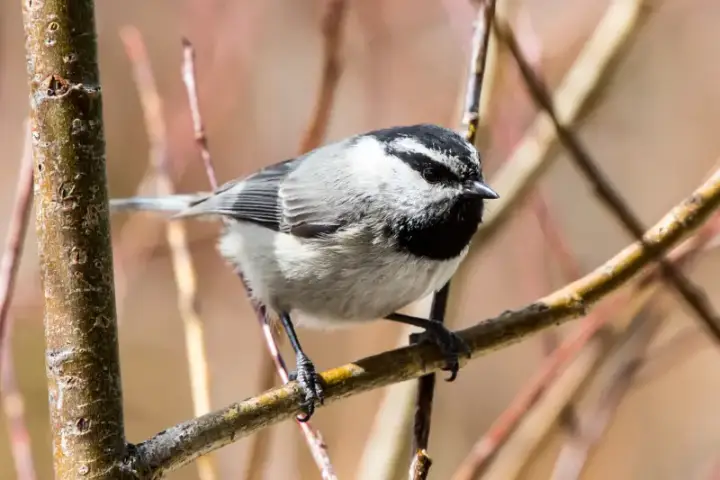 Mountain Chickadee
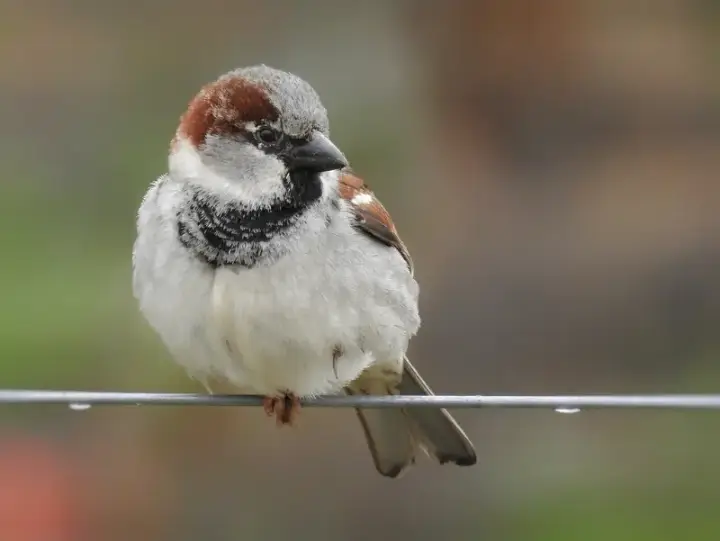 House Sparrow
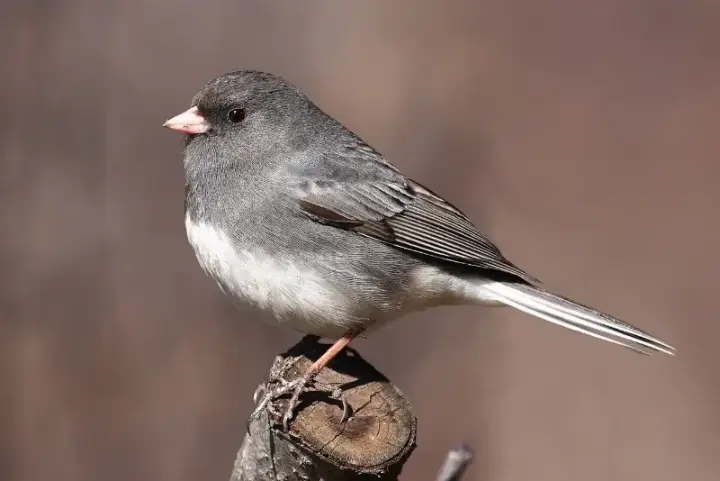 Dark-eyed Junco
- Carolina Chickadee
From iNaturalist identification data for northern Utah.
From Wikipedia
The black-capped chickadee is a small, nonmigratory, North American passerine bird that lives in deciduous and mixed forests. It is a member of the Paridae family, also known as tits. It has a distinct black cap on its head, a black bib underneath, and white cheeks. It has a white belly, buff sides, and grey wings, back, and tail. The bird is well known for its vocalizations, including its fee-bee song and its chick-a-dee-dee-dee call, from which it derives its name.
Wikipedia · CC BY-SA 4.0