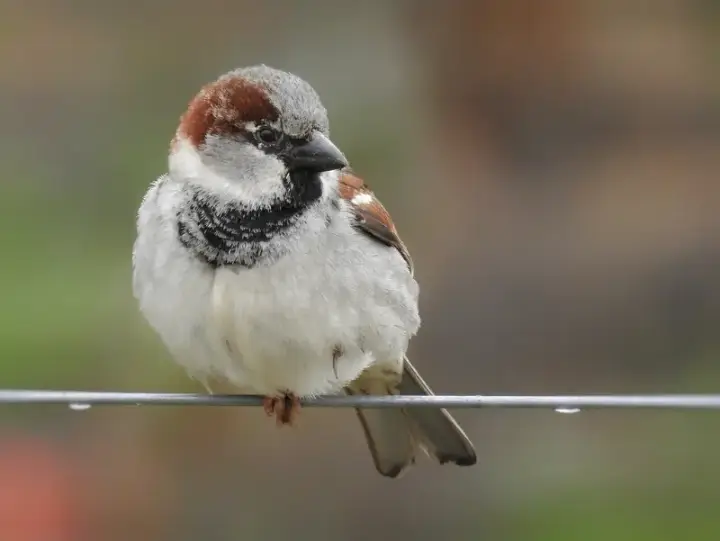
House Sparrow
Passer domesticus · Old World Sparrows
Banding codeHOSP
Keys to identifying it
1Size & shape
About 6.3 in long.
2Color pattern
- Male: gray crown, chestnut nape, black bib
- Female: plain buffy-brown with a pale eyebrow
- Chunky with a thick bill
3Habitat & season
Cities, farms, stores and fast-food lots
In northern Utah: year-round.
Seen most often in March, April, June, July, October, November and December.
Share of the region’s research-grade iNaturalist bird observations each month, scaled to this bird’s peak. Highlighted bars are its peak months.
4Voice
Monotonous, sparrowy chirps given over and over.
“cheep, cheep, cheep”
iNat 227410192 by L.J. Lamera · Yalow Dr, Champaign, IL, US · CC BY
Know it
- Brought from England to Brooklyn, New York, in 1851–52.
- Not a true American sparrow — it belongs to the Old World sparrow family.
- Takes dust baths, flicking dry soil through its feathers and defending the bath from others.
Often confused with
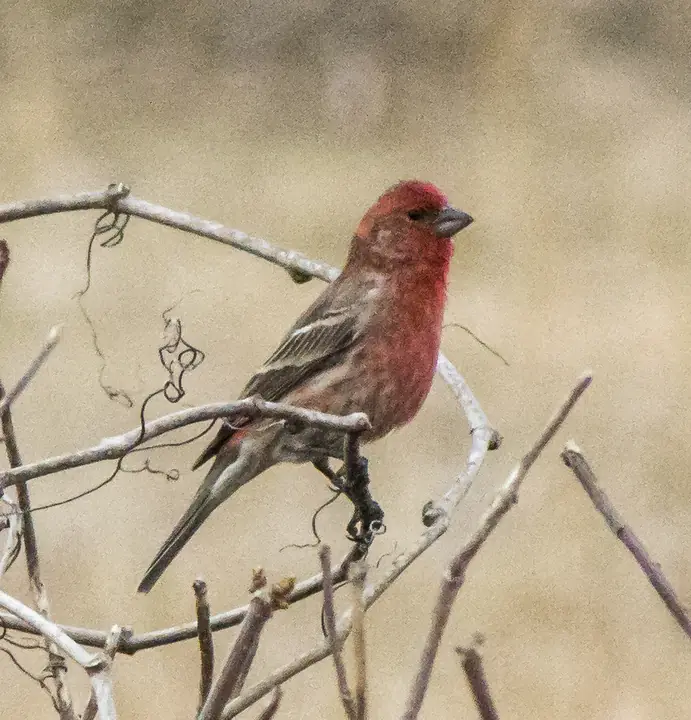 House Finch
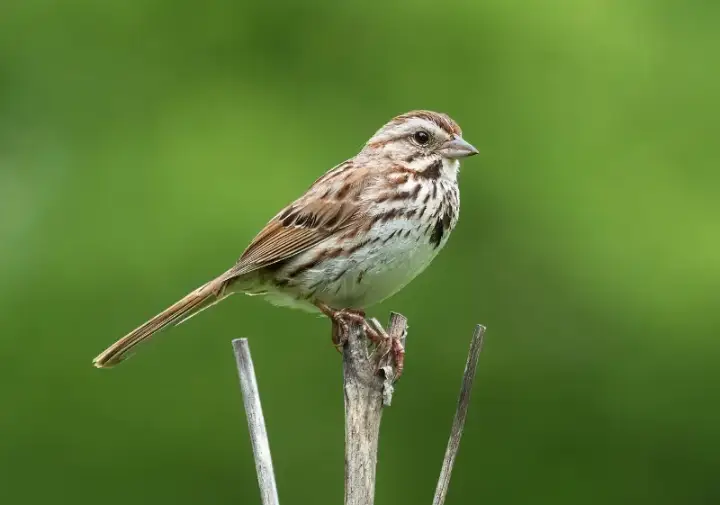 Song Sparrow
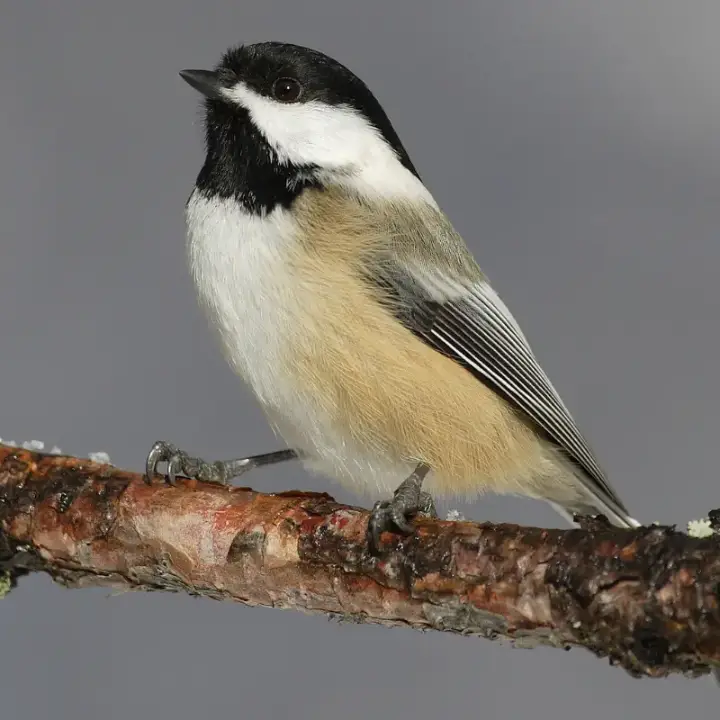 Black-capped Chickadee
- Eurasian Tree Sparrow
- Lark Sparrow
From iNaturalist identification data for northern Utah.
From Wikipedia
The house sparrow is a bird of the sparrow family Passeridae, found in most parts of the world. It is a small bird that has a typical length of 16 cm (6.3 in) and a mass of 24–39.5 g (0.85–1.39 oz). Females and young birds are coloured pale brown and grey, and males have brighter black, white, and brown markings. One of 28 species in the genus Passer, the house sparrow is native to most of Europe, the Mediterranean Basin, and a large part of Asia. Its intentional or accidental introductions to many regions, including parts of Australasia, Africa, and the Americas, make it the most widely distributed wild bird.
Wikipedia · CC BY-SA 4.0