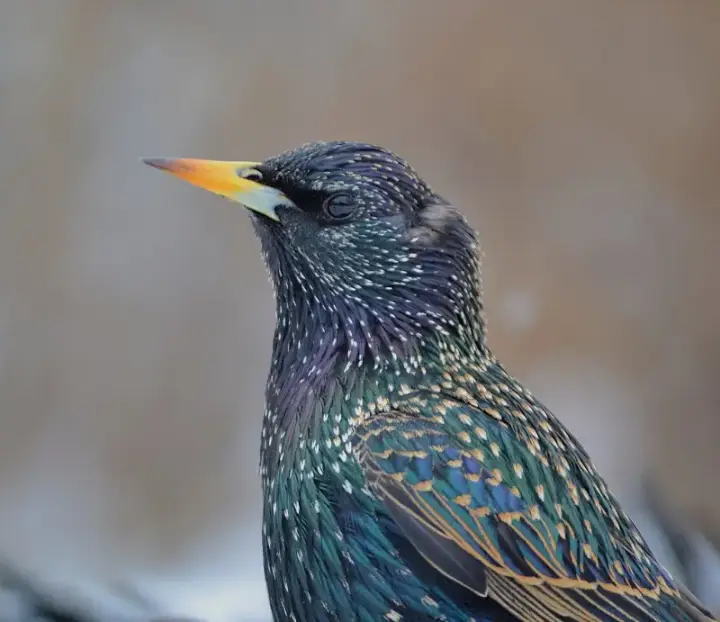
European Starling
Sturnus vulgaris · Starlings
Banding codeEUST
Keys to identifying it
1Size & shape
About 8.5 in long.
2Color pattern
- Glossy black with purple-green sheen
- Yellow bill in summer; white spots in winter
- Short square tail and pointed triangular wings
3Habitat & season
Cities, farms, feedlots
In northern Utah: year-round.
Seen most often in February, March, April, November and December.
Share of the region’s research-grade iNaturalist bird observations each month, scaled to this bird’s peak. Highlighted bars are its peak months.
4Voice
Wheezes, rattles, clicks and whistles, often copying other birds.
“a medley of squeaks, whistles and imitations”
iNat 117199815 by Elana Feldman · Cache County, US-UT, US · CC BY-SA
Know it
- North America's starlings descend from about 100 birds released in New York's Central Park around 1890.
- A skilled mimic that copies other birds and even car alarms.
- Huge flocks twist through the sky in synchronized 'murmurations.'
Often confused with
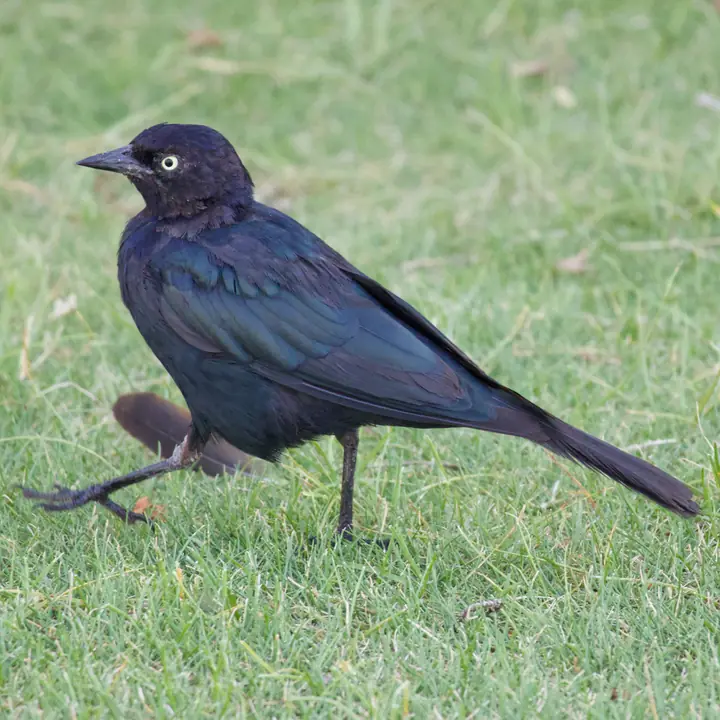 Brewer's Blackbird
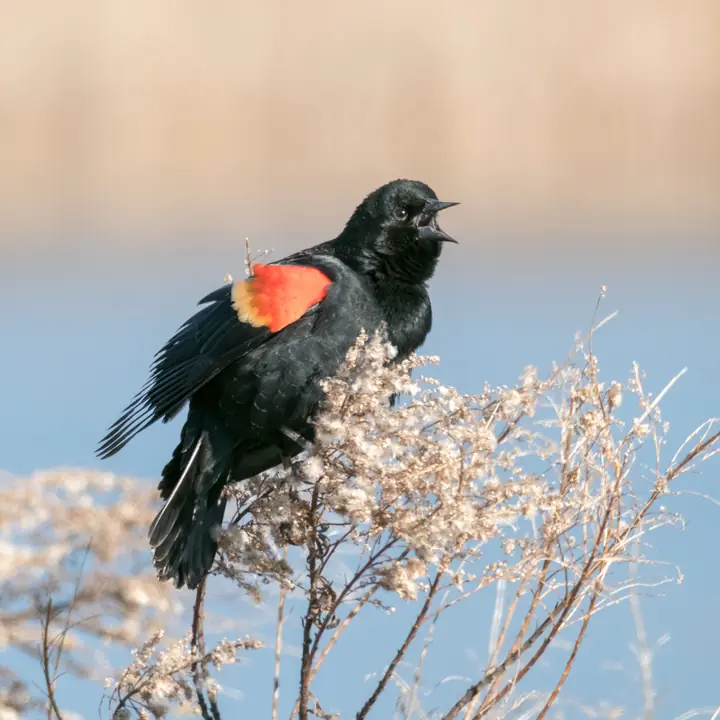 Red-winged Blackbird
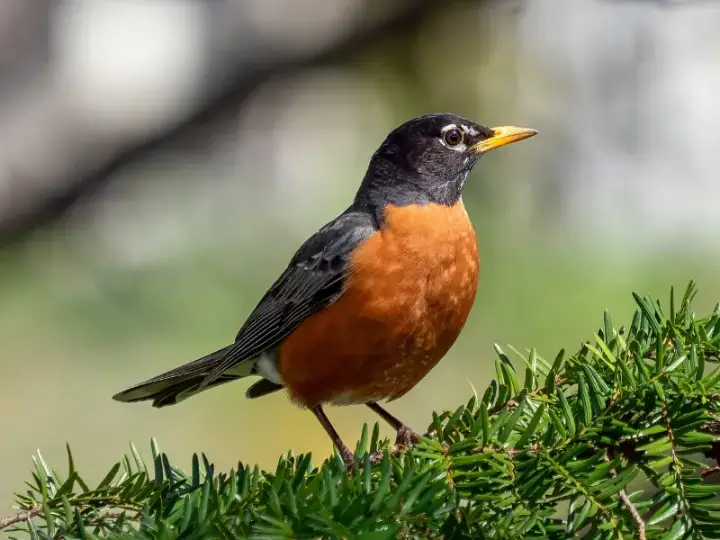 American Robin
- Spotless Starling
- Brown-headed Cowbird
From iNaturalist identification data for northern Utah.
From Wikipedia
The common starling, also known simply as the starling in Great Britain and Ireland, and as the European starling in North America, is a medium-sized passerine bird in the starling family, Sturnidae. It is about 20 cm (8 in) long and has glossy black plumage with a metallic sheen, which is speckled with white at some times of the year. The legs are pink and the bill is black in winter and yellow in summer; young birds have browner plumage than the adults. Its gift for mimicry has been noted in literature including the Mabinogion and the works of Pliny the Elder and William Shakespeare.
Wikipedia · CC BY-SA 4.0