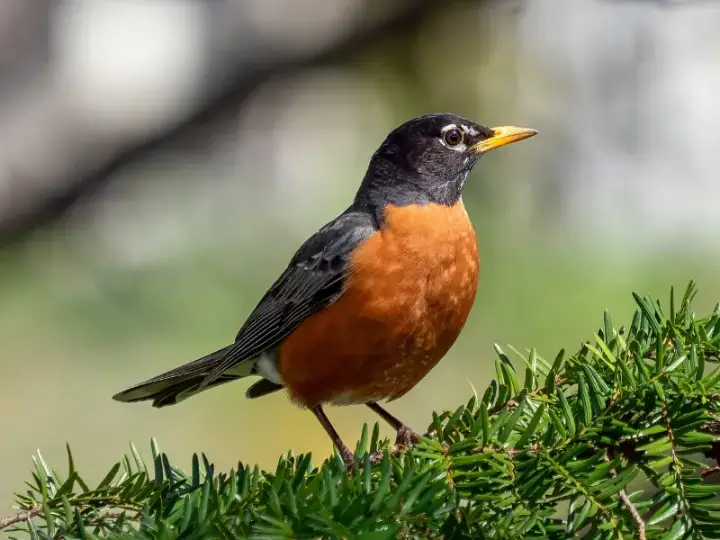
American Robin
Turdus migratorius · Thrushes
Banding codeAMRO
Keys to identifying it
1Size & shape
About 10 in long.
2Color pattern
- Brick-orange breast
- Gray-brown back, darker head
- Broken white eye-ring and yellow bill
3Habitat & season
Lawns, parks, orchards, canyon woodlands
In northern Utah: year-round.
Seen most often in February, March, April and June.
Share of the region’s research-grade iNaturalist bird observations each month, scaled to this bird’s peak. Highlighted bars are its peak months.
4Voice
Rich, caroling phrases in a steady rhythm; also a clucking 'tut-tut' and a sharp whinny.
“cheerily, cheer-up, cheer-up, cheerily”
National Park Service by Rocky Mountain National Park · Public domain
Know it
- Hunts earthworms by running, stopping, and tilting its head over the lawn.
- Its eggs are the source of the color name 'robin's-egg blue.'
- Often among the first birds singing before dawn in spring.
- In winter it switches to fruit like juniper and Russian olive and roams in flocks.
Often confused with
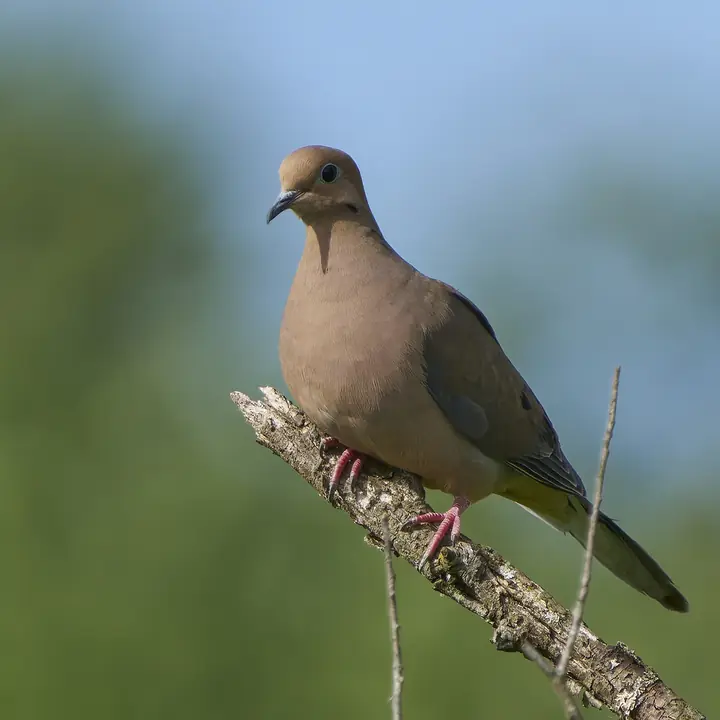 Mourning Dove
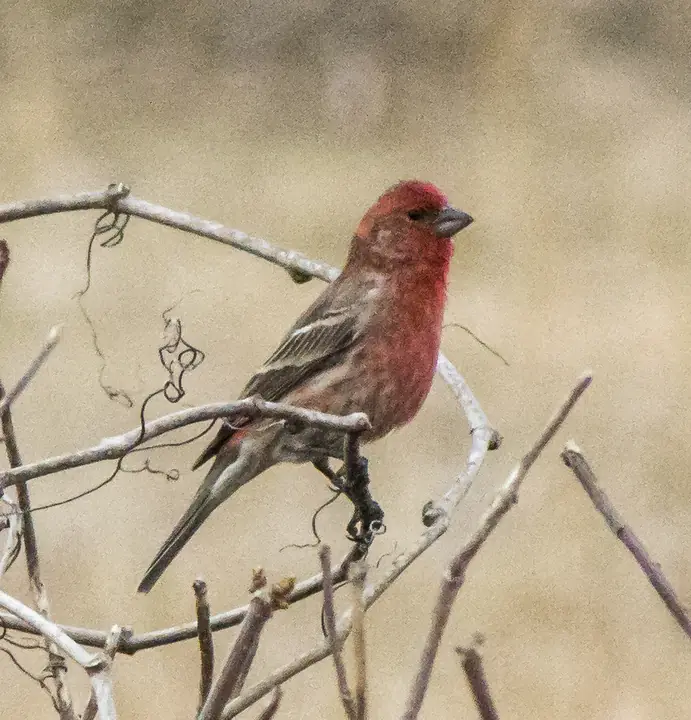 House Finch
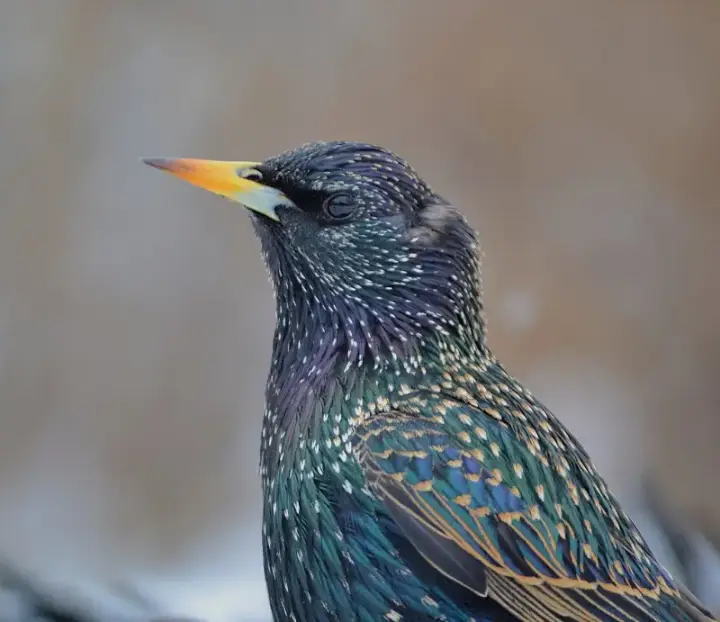 European Starling
- Gray Catbird
From iNaturalist identification data for northern Utah.
From Wikipedia
The American robin is a migratory bird of the true thrush genus and Turdidae, the wider thrush family. It is named after the European robin because of its reddish-orange breast, though the two species are not closely related, with the European robin belonging to the Old World flycatcher family. The American robin is widely distributed throughout North America, wintering from southern Canada to central Mexico and along the Pacific coast.
Wikipedia · CC BY-SA 4.0