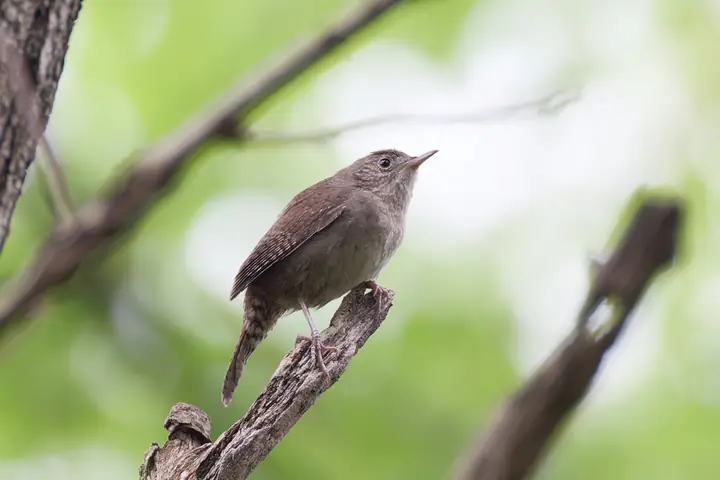
Northern House Wren
Troglodytes aedon · Wrens
Banding codeHOWR
Keys to identifying it
1Size & shape
About 4.75 in long.
2Color pattern
- Small, plain brown
- Finely barred tail, often cocked up
- Faint pale eyebrow
3Habitat & season
Shrubby yards, aspen groves, cottonwoods, nest boxes
In northern Utah: summer.
Seen most often in May and June.
Share of the region’s research-grade iNaturalist bird observations each month, scaled to this bird’s peak. Highlighted bars are its peak months.
4Voice
A bubbly, cascading, rattling song sung almost nonstop.
“a tumbling, bubbling cascade”
iNat 212207697 by Carrie Seltzer · Maple Ave, Takoma Park, MD, US · CC BY
Know it
- Males stuff several nest holes with twigs, and the female picks one to finish.
- Sometimes pecks holes in the eggs of other birds nesting nearby.
- Adds spider egg sacs to its nest; the hatching spiders may eat nest parasites.
- A summer visitor that sings from dawn to dusk.
Often confused with
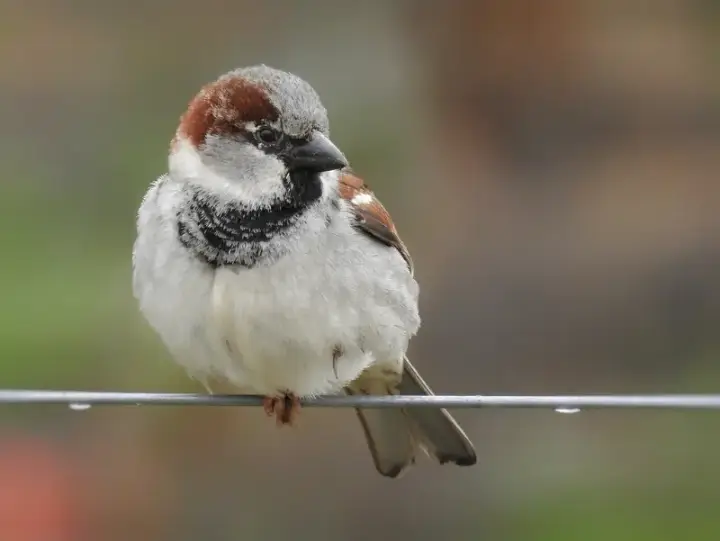 House Sparrow
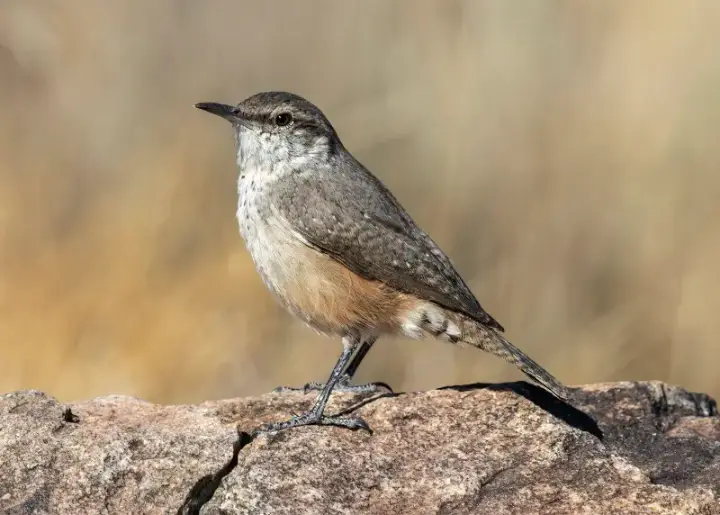 Rock Wren
- Winter Wren
- Pacific Wren
From iNaturalist identification data for northern Utah.
From Wikipedia
The northern house wren is a very small passerine in the wren family Troglodytidae. It is found in southern Canada, the USA and Mexico. It occurs in most suburban areas in its range. It formerly included many subspecies resident in South America and in the Caribbean that are now considered as separate species. The name troglodytes means "hole dweller", and is a reference to the bird's tendency to disappear into crevices when hunting insects or to seek shelter.
Wikipedia · CC BY-SA 4.0