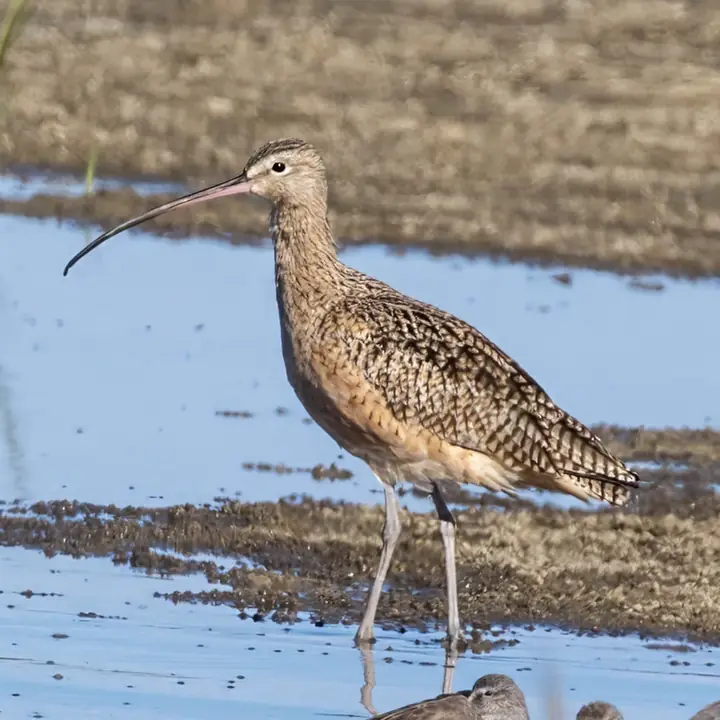
Long-billed Curlew
Numenius americanus · Sandpipers and Allies
Banding codeLBCU
Keys to identifying it
1Size & shape
About 23 in long.
2Color pattern
- Very long, downcurved bill
- Cinnamon-buff body
- Cinnamon underwings in flight
3Habitat & season
Grasslands, farm fields, mudflats
In northern Utah: summer.
Seen most often in April and May.
Share of the region’s research-grade iNaturalist bird observations each month, scaled to this bird’s peak. Highlighted bars are its peak months.
4Voice
A loud, rising, whistled call.
“cur-LEEE”
iNat 140186701 by Charla · Santa Barbara County, US-CA, US · CC BY
Know it
- North America's largest shorebird.
- The female's bill is longer than the male's.
- Nests in dry grasslands, often far from water.
- Its rising 'cur-lee' carries across open fields.
Often confused with
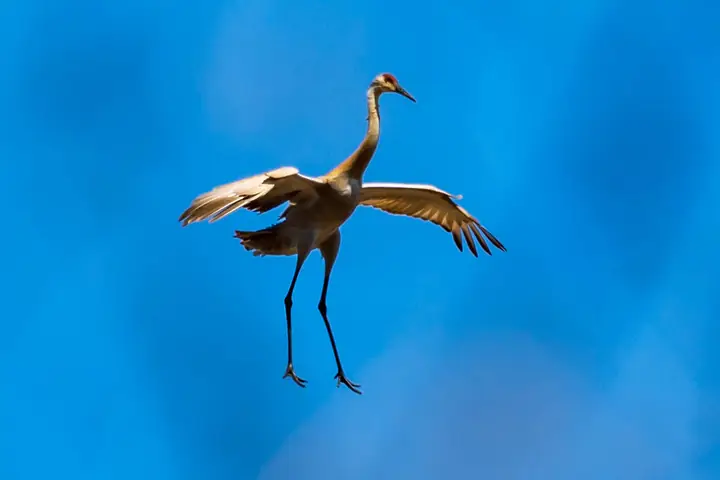 Sandhill Crane
- Marbled Godwit
- Hudsonian Whimbrel
From iNaturalist identification data for northern Utah.
From Wikipedia
The long-billed curlew is a large North American shorebird of the family Scolopacidae. This species was also called "sicklebird" and the "candlestick bird". The species breeds in central and western North America, migrating southward and coastward for the winter.
Wikipedia · CC BY-SA 4.0