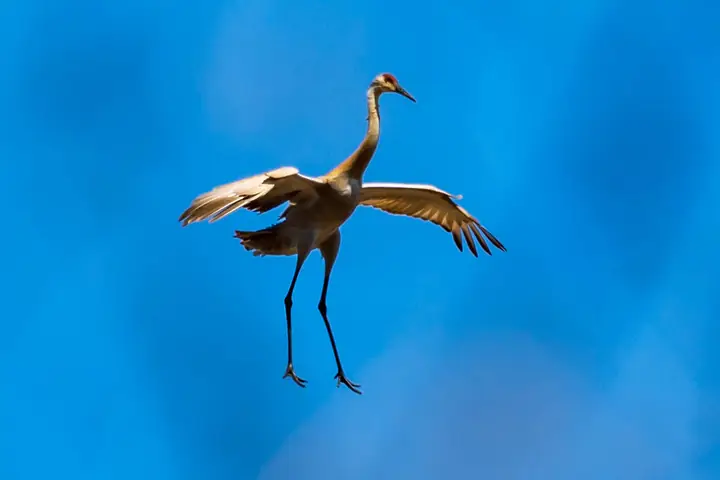
Sandhill Crane
Antigone canadensis · Cranes
Banding codeSACR
Keys to identifying it
1Size & shape
About 44 in long.
2Color pattern
- Tall gray body with a red crown
- Neck held straight in flight
- Feathery 'bustle' over the tail
3Habitat & season
Wet meadows, farm fields, Cache Valley
In northern Utah: summer.
Seen most often in March.
Share of the region’s research-grade iNaturalist bird observations each month, scaled to this bird’s peak. Highlighted bars are its peak months.
4Voice
A loud, rolling, bugling call that carries for miles.
“garoo-oo-oo (rolling bugle)”
iNat 279397043 by Jared Shorma · Brown Ln, Woodruff, UT, US · CC BY
Know it
- Paints its gray feathers rusty-brown by preening with iron-rich mud.
- Flies with its neck stretched straight out — unlike herons.
- Pairs perform leaping, wing-flapping dances.
- Its long windpipe coils inside the breastbone, helping its call carry for miles.
Often confused with
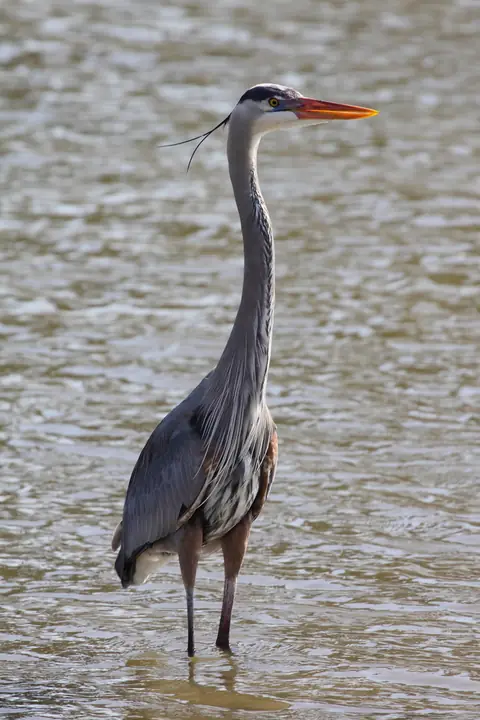 Great Blue Heron
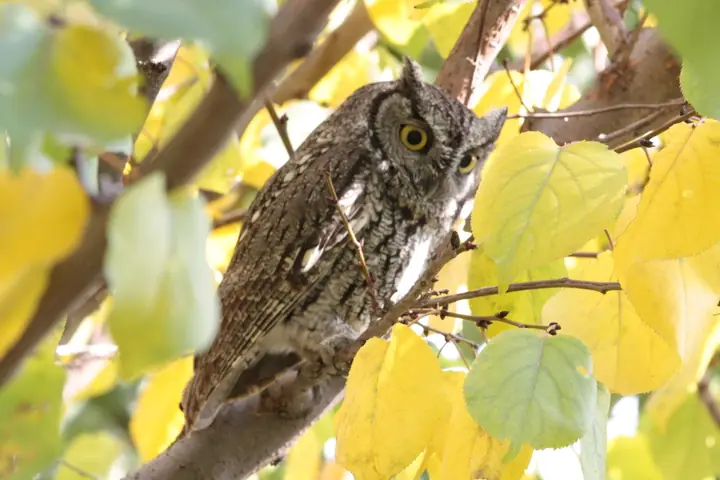 Western Screech-Owl
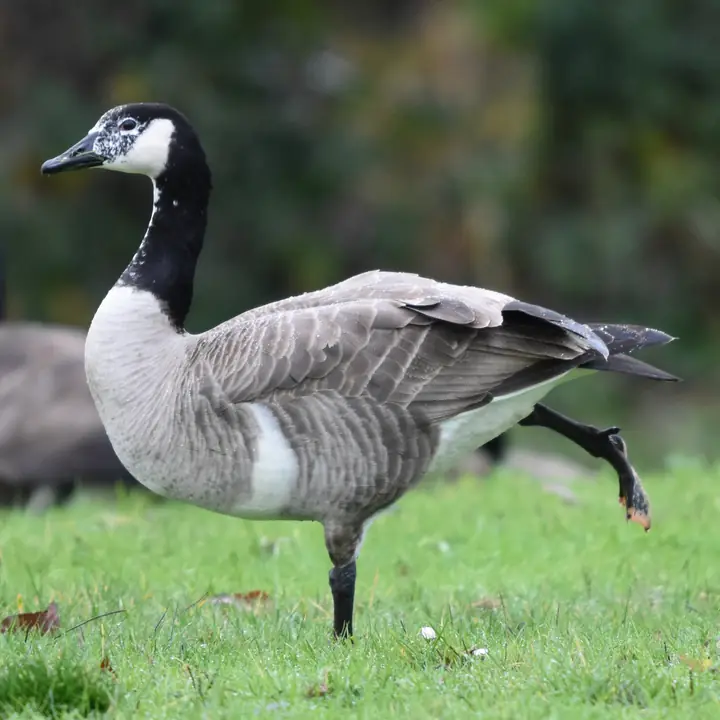 Canada Goose
- Whooping Crane
- Marbled Duck
From iNaturalist identification data for northern Utah.
From Wikipedia
The sandhill crane is a species of large crane of North America and extreme northeastern Siberia. The common name of this bird refers to its habitat, such as the Platte River, on the edge of Nebraska's Sandhills on the American Great Plains. Sandhill cranes are known to frequent the edges of bodies of water. The central Platte River Valley in Nebraska is the most important stopover area for the nominotypical subspecies, the lesser sandhill crane (A. c. canadensis), with up to 450,000 of these birds migrating through annually.
Wikipedia · CC BY-SA 4.0