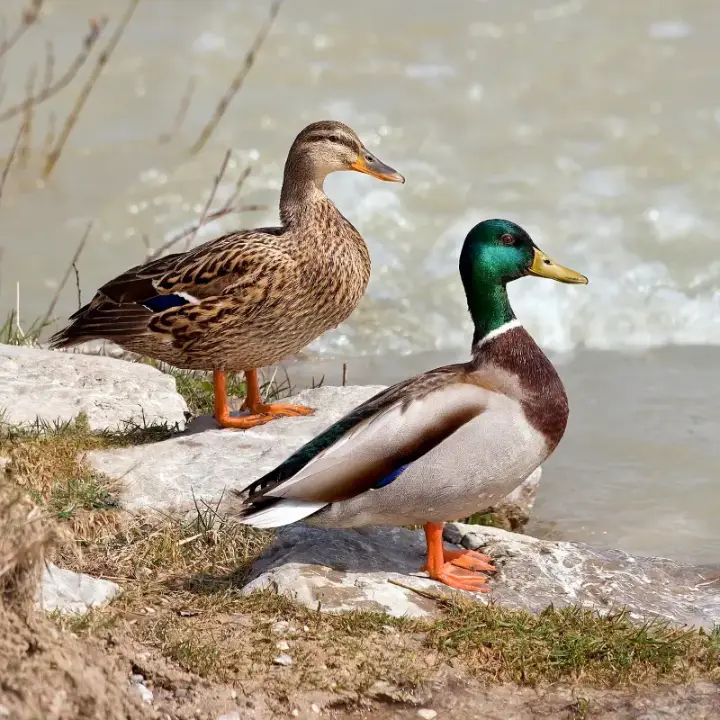
Mallard
Anas platyrhynchos · Ducks, Geese, and Swans
Banding codeMALL
Keys to identifying it
1Size & shape
About 23 in long.
2Color pattern
- Male: glossy green head, yellow bill, white neck ring
- Female: mottled brown with orange-and-black bill
- Blue wing patch bordered in white
3Habitat & season
Any pond, river, park or ditch
In northern Utah: year-round.
Seen most often in March, April, November and December.
Share of the region’s research-grade iNaturalist bird observations each month, scaled to this bird’s peak. Highlighted bars are its peak months.
4Voice
The female gives the classic loud, descending quacks; males are raspier and quieter.
“QUACK quack quack quack”
iNat 16238282 by xianning · Mission Bay, San Diego, CA, USA · CC0
Know it
- Only the female gives the classic loud quack.
- Ancestor of most domestic duck breeds.
- A dabbling duck that tips tail-up to feed instead of diving.
- The most-observed bird in Utah on iNaturalist (research-grade records).
Often confused with
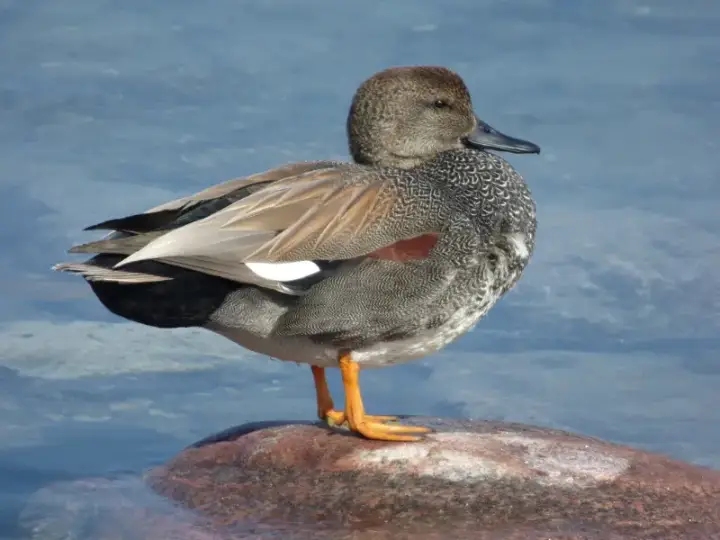 Gadwall
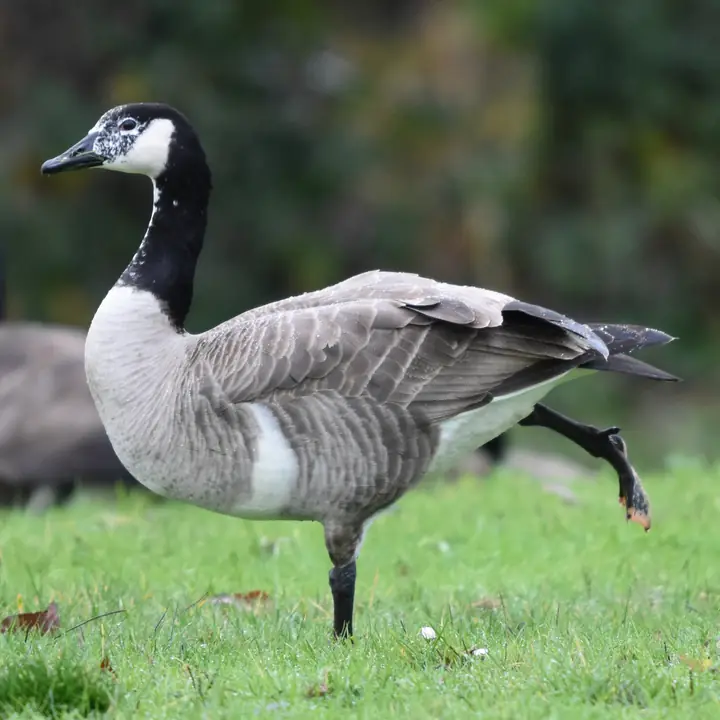 Canada Goose
- Muscovy Duck
- Pacific Black Duck × Mallard
From iNaturalist identification data for northern Utah.
From Wikipedia
The mallard or wild duck is a dabbling duck that breeds throughout temperate and subtropical North America, Eurasia, and North Africa. It has been introduced to New Zealand, Australia, Peru, Brazil, Uruguay, Argentina, Chile, Colombia, the Falkland Islands, and South Africa. Belonging to the subfamily Anatinae of the waterfowl family Anatidae, mallards live in wetlands, eat water plants and small animals, and are social animals preferring to congregate in groups or flocks of varying sizes.
Wikipedia · CC BY-SA 4.0