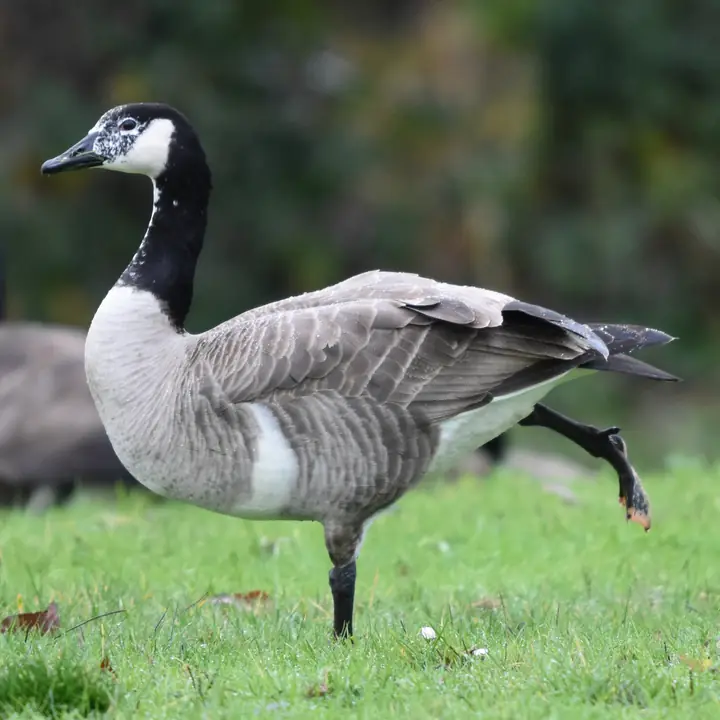
Canada Goose
Branta canadensis · Ducks, Geese, and Swans
Banding codeCANG
Keys to identifying it
1Size & shape
About 40 in long.
2Color pattern
- Black head and long black neck
- White chinstrap
- Brown body with a pale breast
3Habitat & season
Parks, golf courses, lakes, fields
In northern Utah: year-round.
Seen most often in February, March and April.
Share of the region’s research-grade iNaturalist bird observations each month, scaled to this bird’s peak. Highlighted bars are its peak months.
4Voice
Loud honking, often from flying flocks.
“ah-HONK!”
iNat 267981225 by Damien Wallace · Salt Lake City, UT 84105, USA · CC0
Know it
- Flies in V-formations, saving energy by riding the air off neighbors' wings.
- Pairs typically stay together for many years.
- Loses its flight feathers each summer and is grounded for about a month.
Often confused with
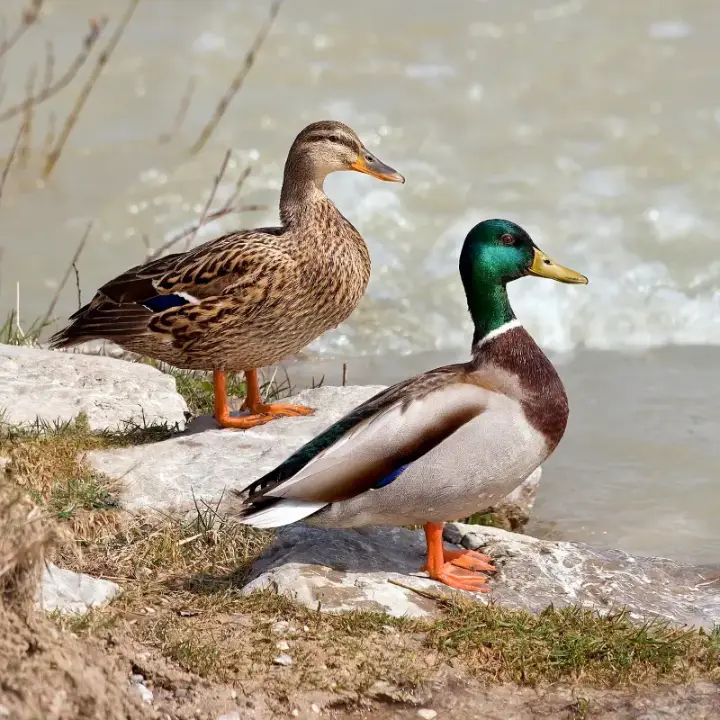 Mallard
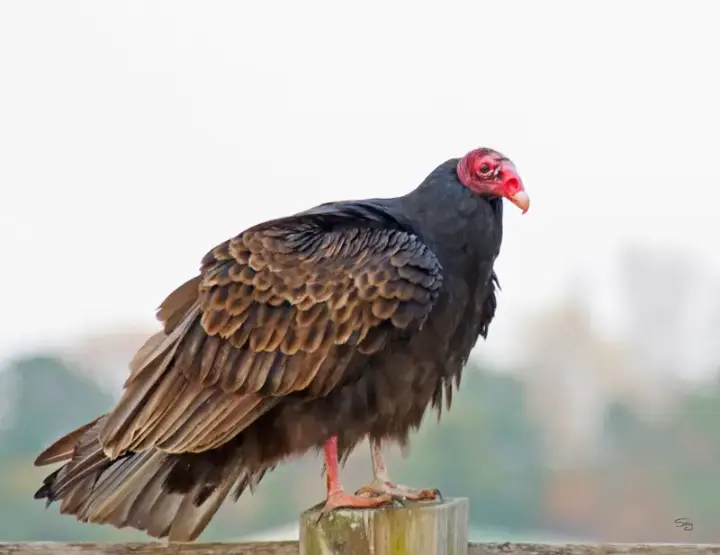 Turkey Vulture
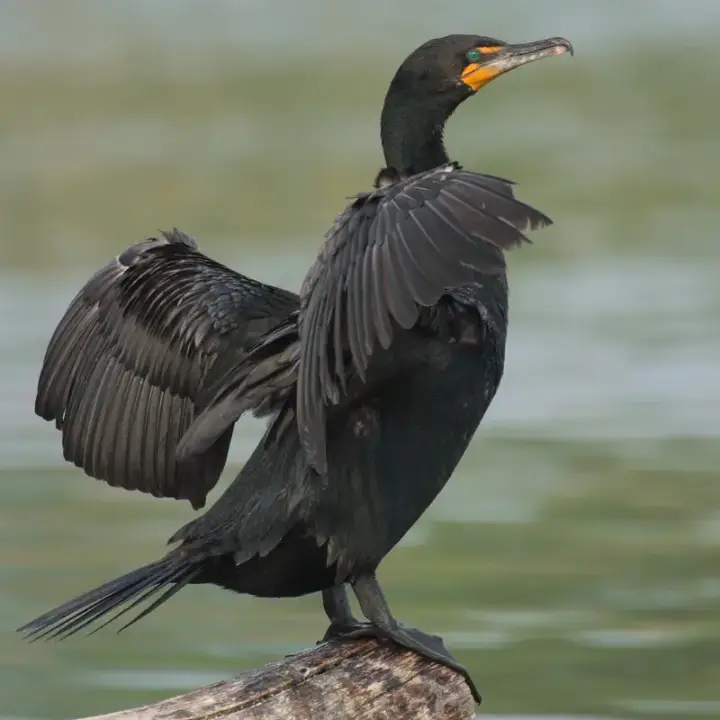 Double-crested Cormorant
- Cackling Goose
From iNaturalist identification data for northern Utah.
From Wikipedia
The Canada goose is a large species of goose with a black head and neck, white cheeks, white under its chin, and a brown body. It is native to the Arctic and temperate regions of North America, and it is occasionally found during migration across the Atlantic in northern Europe. It has been introduced to France, the United Kingdom, Ireland, Scandinavia, New Zealand, Japan, Chile, Argentina, and the Falkland Islands. Like most geese, the Canada goose is primarily herbivorous and normally migratory; often found on or close to fresh water, the Canada goose is also common in brackish marshes, estuaries, and lagoons.
Wikipedia · CC BY-SA 4.0