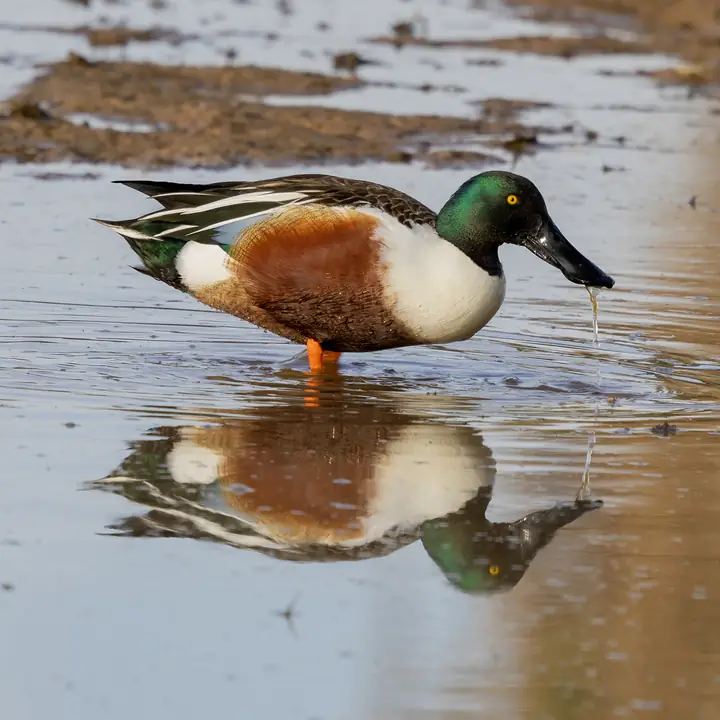
Northern Shoveler
Spatula clypeata · Ducks, Geese, and Swans
Banding codeNSHO
Keys to identifying it
1Size & shape
About 19 in long.
2Color pattern
- Huge spoon-shaped bill
- Male: green head, white chest, chestnut sides
- Yellow eye on the male
3Habitat & season
Shallow ponds and marshes
In northern Utah: year-round.
Seen most often in January and February.
Share of the region’s research-grade iNaturalist bird observations each month, scaled to this bird’s peak. Highlighted bars are its peak months.
4Voice
Males give a low, nasal 'took-took'.
“took-took”
iNat 162140322 by Dan MacNeal · Wellington County, ON, Canada · CC BY
Know it
- Its spoon bill has comb-like edges that strain tiny food from the water.
- Groups spin in circles to stir up food.
- Gathers in big numbers in the Great Salt Lake's marshes during spring and fall migration.
Often confused with
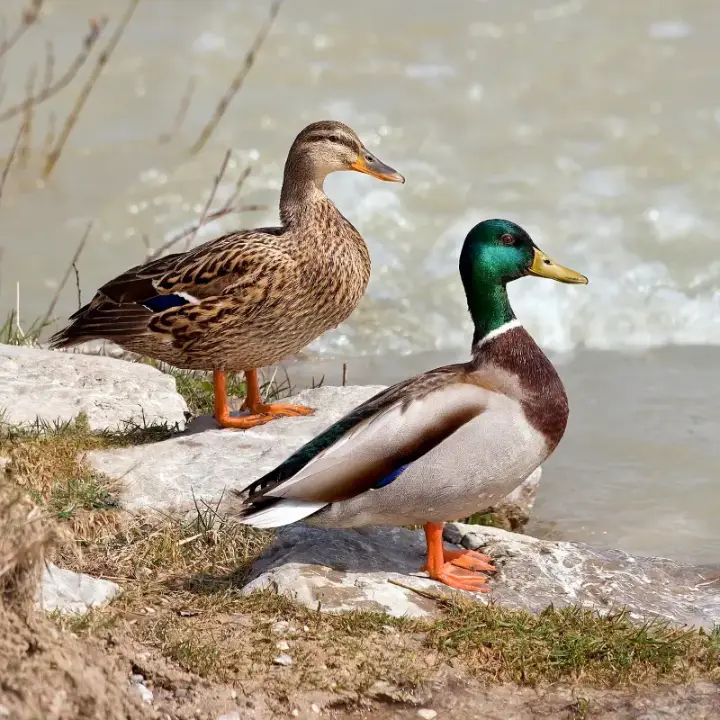 Mallard
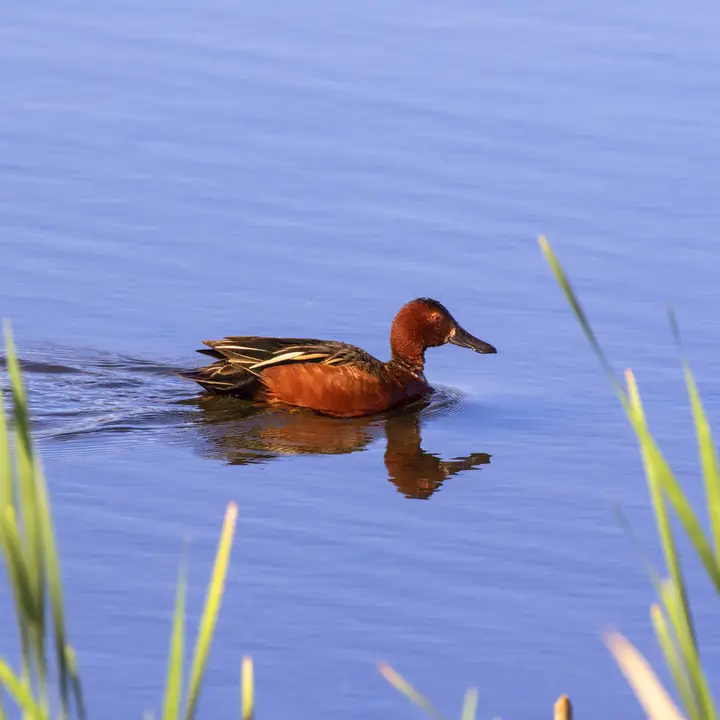 Cinnamon Teal
- Northern Pintail
From iNaturalist identification data for northern Utah.
From Wikipedia
The northern shoveler, often known simply as the shoveler where other related species do not occur, is a common and widespread duck. It breeds in northern areas of Europe and throughout the Palearctic and across most of North America, and winters in southern Europe, the Indian subcontinent, Southeast Asia, Central America, the Caribbean, and northern South America. It is a rare vagrant to Australia. In North America, it breeds along the southern edge of Hudson Bay and west of this body of water, and as far south as the Great Lakes west to Colorado, Nevada, and Oregon.
Wikipedia · CC BY-SA 4.0