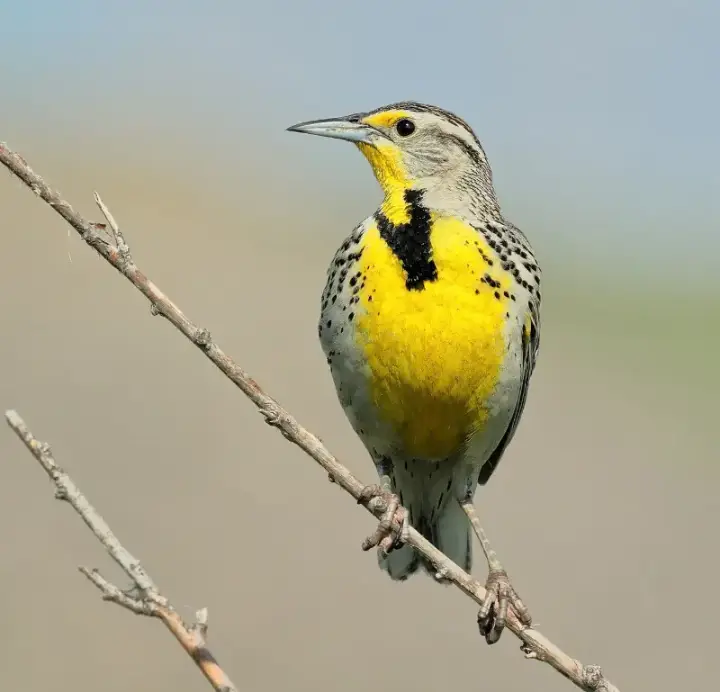
Western Meadowlark
Sturnella neglecta · New World Blackbirds and Orioles
Banding codeWEME
Keys to identifying it
1Size & shape
About 9.5 in long.
2Color pattern
- Bright yellow throat and breast with a black V
- Brown streaked back
- Long pointed bill; white outer tail feathers
3Habitat & season
Grasslands, pastures, sagebrush flats
In northern Utah: year-round.
Seen most often in March and April.
Share of the region’s research-grade iNaturalist bird observations each month, scaled to this bird’s peak. Highlighted bars are its peak months.
4Voice
Rich, bubbling, flute-like song; a low 'chuck' call.
“a liquid, tumbling flute song”
iNat 109472909 by Grant Chovil · Antelope Island State Park, West Bountiful, UT, US · CC BY
Know it
- State bird of six states — but not Utah.
- Its scientific name 'neglecta' notes it was long overlooked as the Eastern Meadowlark.
- Despite the name, it is a blackbird, not a lark.
Often confused with
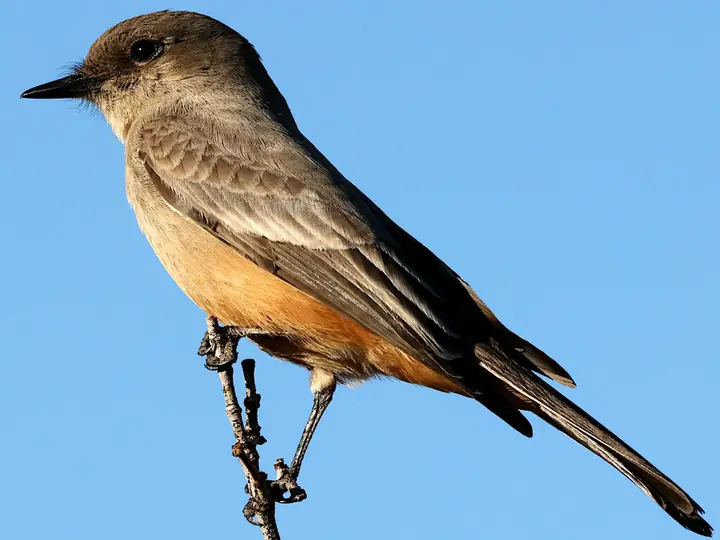 Say's Phoebe
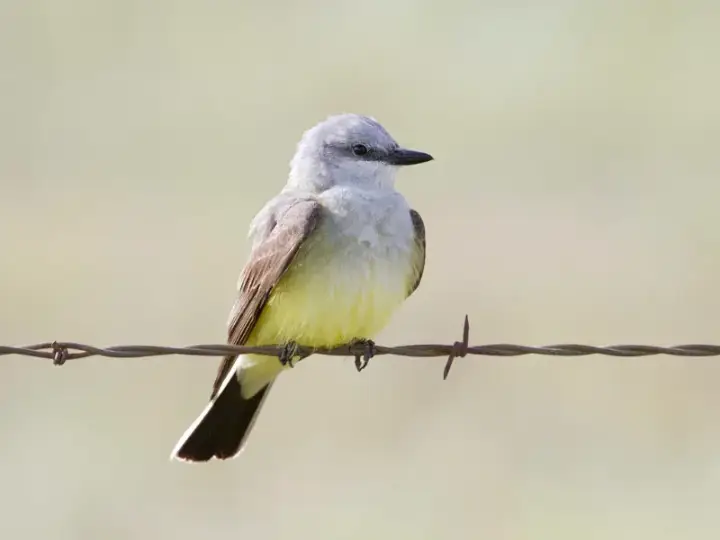 Western Kingbird
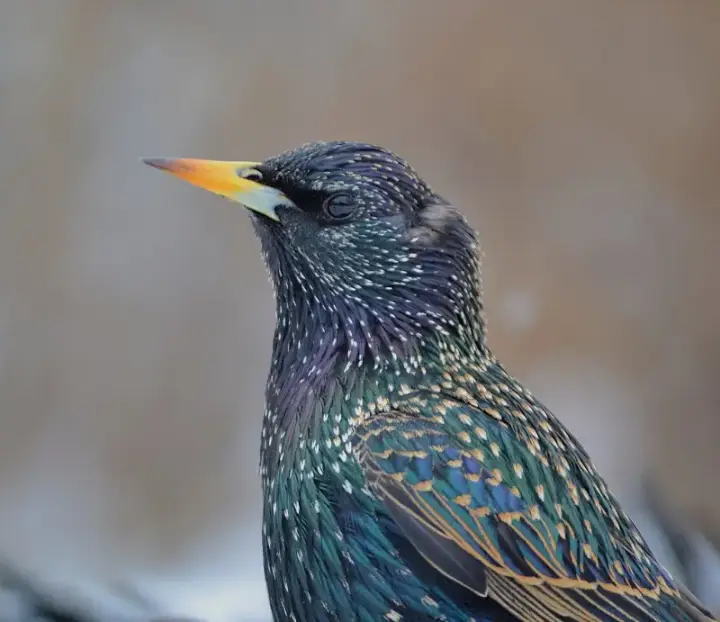 European Starling
- Chestnut-collared Longspur
- Common Poorwill
From iNaturalist identification data for northern Utah.
From Wikipedia
The western meadowlark is a medium-sized icterid bird, about 20 cm (7.9 in) in length. It is found across western and central North America and is a partial migrant, breeding in western Canada and western United States west of the Great Lakes, and in northern Mexico. In the northern half of the breeding range, the birds migrate south for the winter, while further south they are resident all year. The winter range also extends south and southeast of the breeding range, as far as central Mexico, and east to western Florida. The western meadowlark nests on the ground in open grasslands and shrublands. It feeds on bugs and seeds. The western meadowlark has distinctive calls described as watery or flute-like, which distinguish it from the closely related eastern meadowlark. The western meadowlark is the state bird of six states; in Kansas, Montana, Nebraska, North Dakota, Oregon, and Wyoming.
Wikipedia · CC BY-SA 4.0