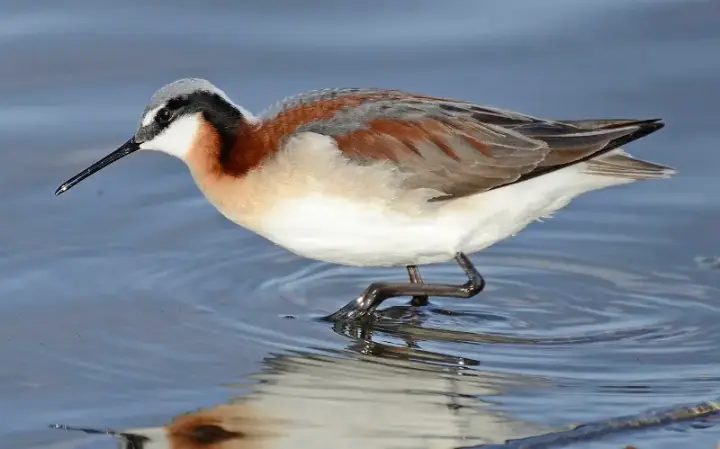
Wilson's Phalarope
Phalaropus tricolor · Sandpipers and Allies
Banding codeWIPH
Keys to identifying it
1Size & shape
About 9 in long.
2Color pattern
- Needle-thin black bill
- Breeding female: gray crown with black-to-cinnamon neck stripe
- Spins in circles on the water
3Habitat & season
Salt ponds, shallow wetlands, Great Salt Lake shorelines
In northern Utah: summer.
Seen most often in June and July.
Share of the region’s research-grade iNaturalist bird observations each month, scaled to this bird’s peak. Highlighted bars are its peak months.
4Voice
Soft, nasal grunts.
“a quiet, nasal 'wurf'”
Warbly has no recording of this bird.
Know it
- Females are the more colorful sex and court the males; males incubate and raise the chicks.
- Spins in tight circles on the water to pull food up toward the surface.
- More than 500,000 — about a third of the world's population — stop at the Great Salt Lake to fatten up before flying to South America.
Often confused with
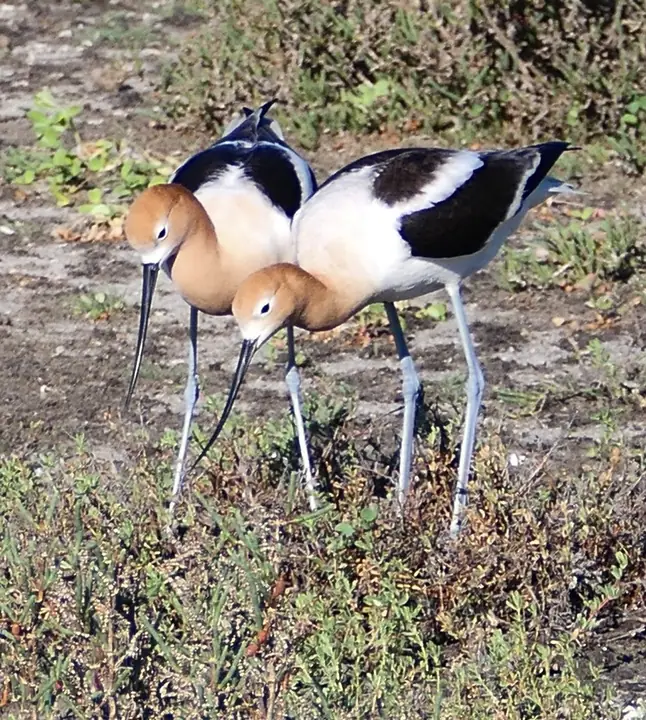 American Avocet
- Red-necked Phalarope
- Lesser Yellowlegs
From iNaturalist identification data for northern Utah.
From Wikipedia
Wilson's phalarope is a small wader. This bird, the largest of the phalaropes, breeds in the prairies of North America in western Canada and the western United States. It is migratory, wintering in inland salt lakes near the Andes in Argentina. They are passage migrants through Central America around March/April and again during September/October. The species is a rare vagrant to western Europe.
Wikipedia · CC BY-SA 4.0