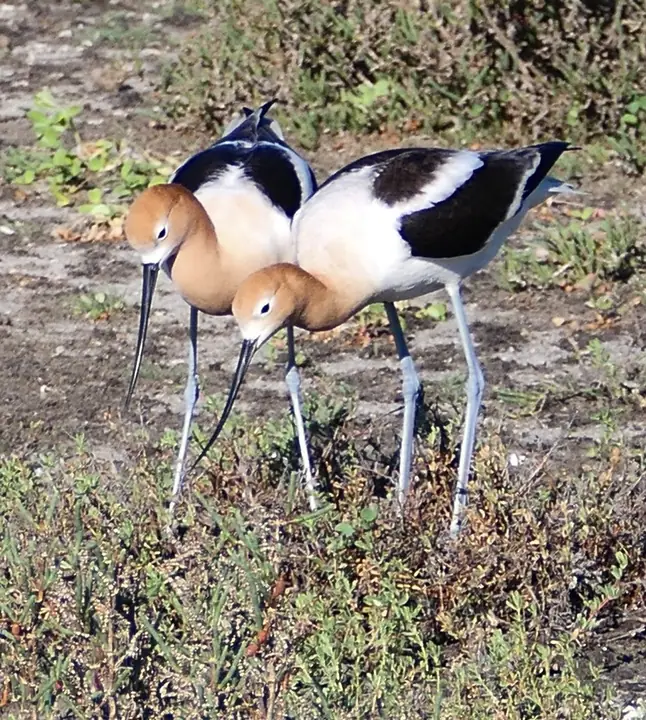
American Avocet
Recurvirostra americana · Stilts and Avocets
Banding codeAMAV
Keys to identifying it
1Size & shape
About 18 in long.
2Color pattern
- Long, thin, upturned bill
- Bold black-and-white back
- Cinnamon head and neck in breeding season; gray in winter
3Habitat & season
Shallow salty ponds, mudflats, playas
In northern Utah: summer.
Seen most often in April and September.
Share of the region’s research-grade iNaturalist bird observations each month, scaled to this bird’s peak. Highlighted bars are its peak months.
4Voice
Loud, piercing 'kleek' alarm calls.
“kleek! kleek!”
iNat 362615528 by Liam Steele · Thompson-Nicola, BC, Canada · CC BY
Know it
- Sweeps its upturned bill side to side through shallow water to catch prey.
- Its head turns from cinnamon in summer to gray in winter.
- Around 250,000 — more than half the world's population — use the Great Salt Lake's wetlands.
Often confused with
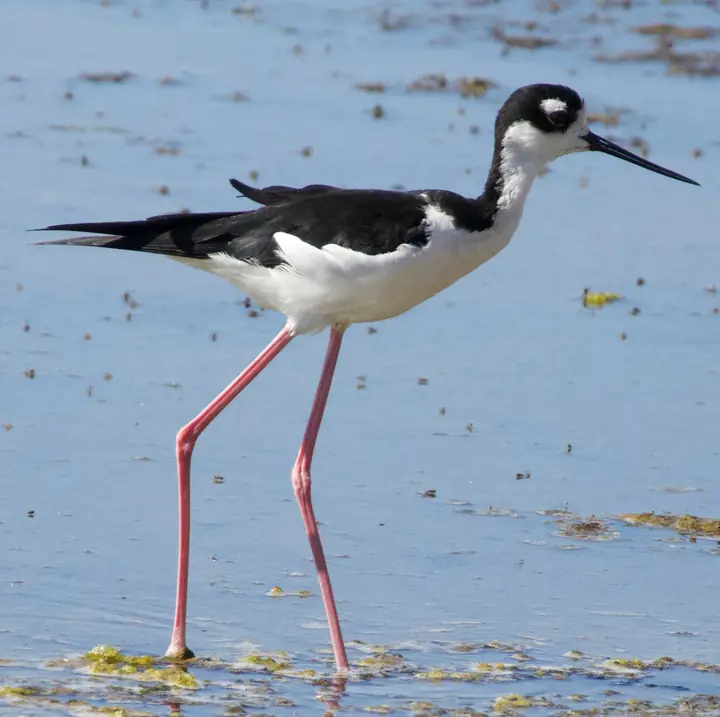 Black-necked Stilt
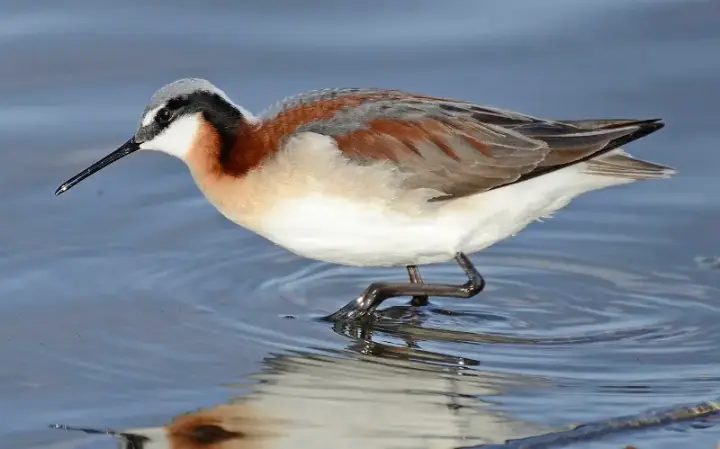 Wilson's Phalarope
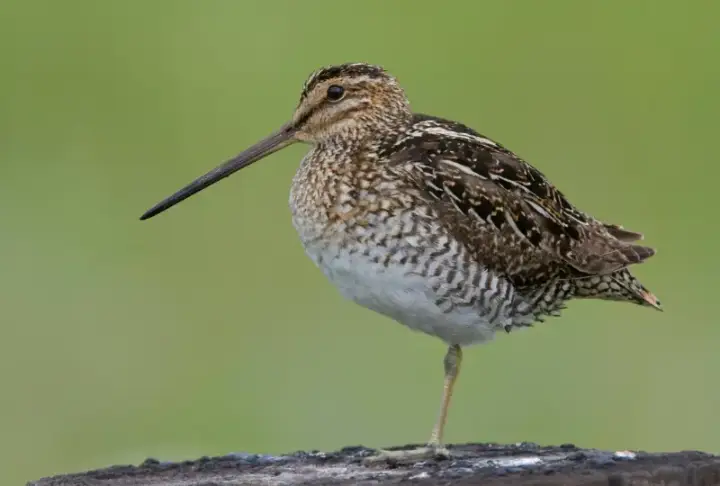 Wilson's Snipe
From iNaturalist identification data for northern Utah.
From Wikipedia
The American avocet is a large wader in the avocet and stilt family, Recurvirostridae, found in North America. It spends much of its time foraging in shallow water or on mud flats, often sweeping its bill from side to side in water as it seeks crustacean and insect prey.
Wikipedia · CC BY-SA 4.0