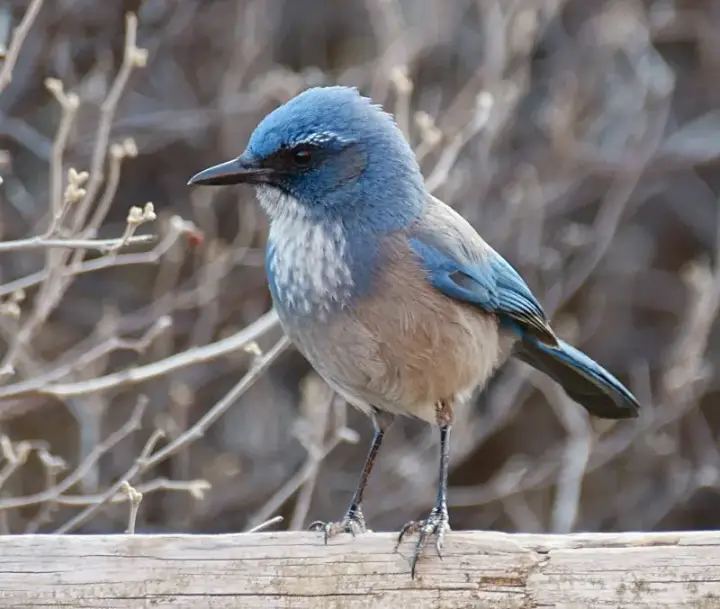
Woodhouse's Scrub-Jay
Aphelocoma woodhouseii · Crows, Jays, and Magpies
Banding codeWOSJ
Keys to identifying it
1Size & shape
About 11 in long.
2Color pattern
- Blue head, wings and tail — no crest
- Gray-brown back
- Whitish throat with a faint blue necklace
3Habitat & season
Pinyon-juniper, scrub oak, foothill neighborhoods
In northern Utah: year-round.
Seen most often in September, October and November.
Share of the region’s research-grade iNaturalist bird observations each month, scaled to this bird’s peak. Highlighted bars are its peak months.
4Voice
Harsh, raspy scolds and rising shrieks.
“shreeenk! shreeenk!”
iNat 315834557 by Scott Crabtree · Old Fort Lowell, Tucson, AZ 85712, USA · CC BY
Know it
- Was split from the 'Western Scrub-Jay' into two species in 2016.
- Buries pinyon nuts and acorns to eat later; forgotten caches can sprout into new trees.
- Has no crest — the quickest way to tell it from a Steller's Jay.
Often confused with
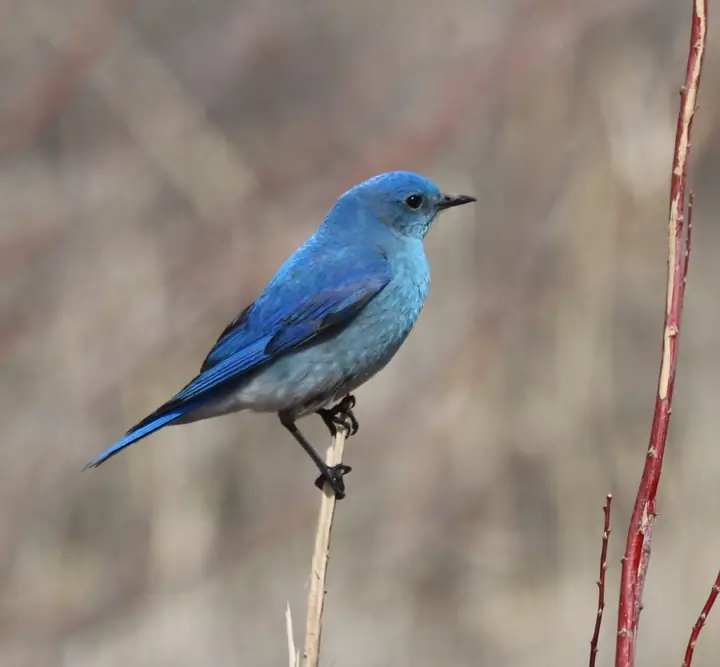 Mountain Bluebird
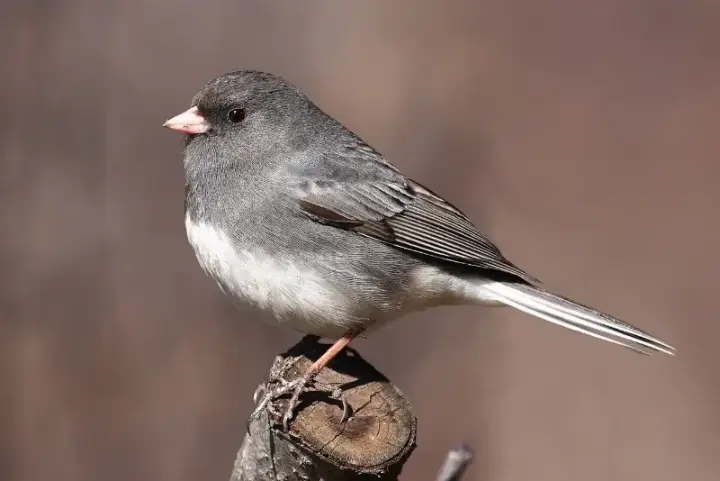 Dark-eyed Junco
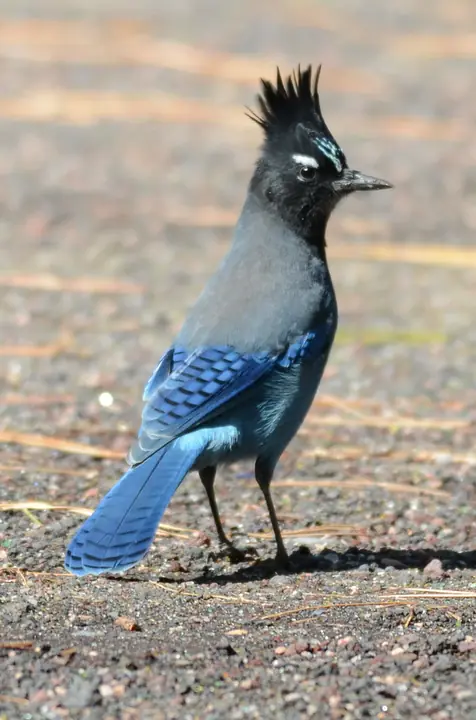 Steller's Jay
- Pinyon Jay
- California Scrub-Jay
From iNaturalist identification data for northern Utah.
From Wikipedia
Woodhouse's scrub jay is a species of scrub jay native to western North America, ranging from southeastern Oregon and southern Idaho to central Mexico. Woodhouse's scrub jay was until recently considered the same species as the California scrub jay, and collectively called the western scrub jay. Prior to that both of them were also considered the same species as the island scrub jay and the Florida scrub jay; the taxon was then called simply the scrub jay. Woodhouse's scrub jay is nonmigratory and can be found in urban areas, where it can become tame and will come to bird feeders. While many refer to scrub jays as "blue jays", the blue jay is a different species of bird entirely. Woodhouse's scrub jay is named for the American naturalist and explorer Samuel Washington Woodhouse.
Wikipedia · CC BY-SA 4.0