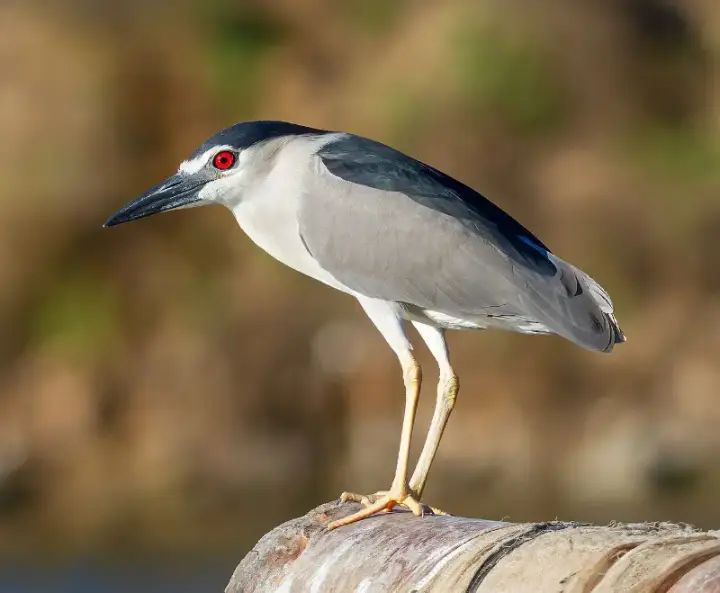
Black-crowned Night Heron
Nycticorax nycticorax · Herons, Egrets, and Bitterns
Banding codeBCNH
Keys to identifying it
1Size & shape
About 25 in long.
2Color pattern
- Stocky heron with a black crown and back
- Gray wings, white underparts
- Red eyes; young are brown with white spots
3Habitat & season
Marshes, ponds, river edges
In northern Utah: summer.
Seen most often in January, May, June, July and August.
Share of the region’s research-grade iNaturalist bird observations each month, scaled to this bird’s peak. Highlighted bars are its peak months.
4Voice
A flat, barking call, often at dusk.
“quok!”
iNat 176083704 by Kristi Zoebelein · Ragland, AL 35131, USA · CC0
Know it
- Feeds mostly at night and dusk.
- Its call is a flat, barking 'quok.'
- Young birds are brown with white spots and look like a different species.
- The most widespread heron in the world.
Often confused with
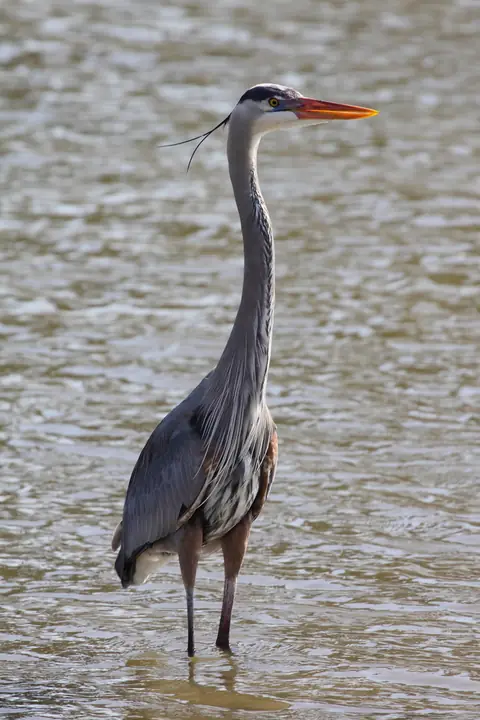 Great Blue Heron
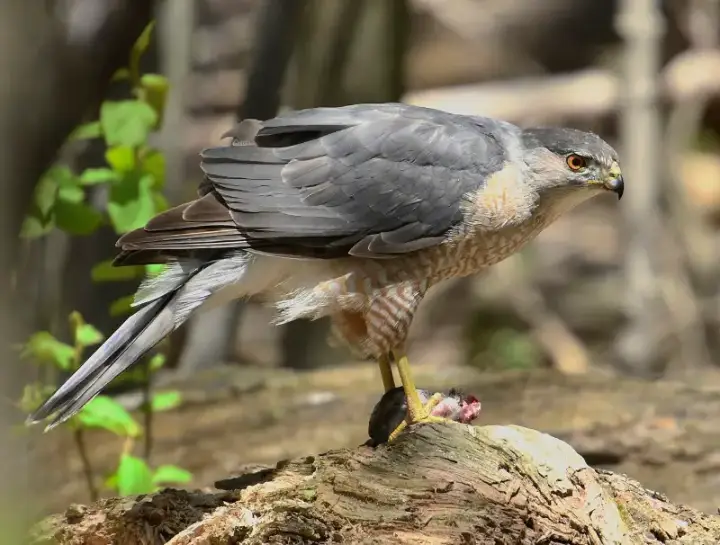 Cooper's Hawk
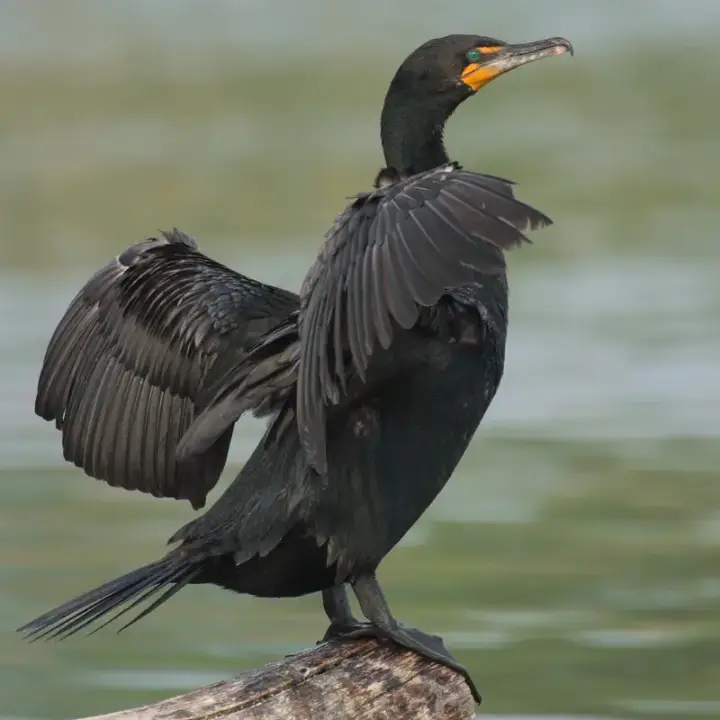 Double-crested Cormorant
- American Bittern
- Yellow-crowned Night Heron
From iNaturalist identification data for northern Utah.
From Wikipedia
The black-crowned night heron or black-capped night heron, commonly shortened to just night heron in Eurasia, is a medium-sized heron found throughout a large part of the world, including parts of Africa, Asia, Europe, and North and South America. In Australasia it is replaced by the closely related Nankeen night heron, with which it has hybridised in the area of contact.
Wikipedia · CC BY-SA 4.0