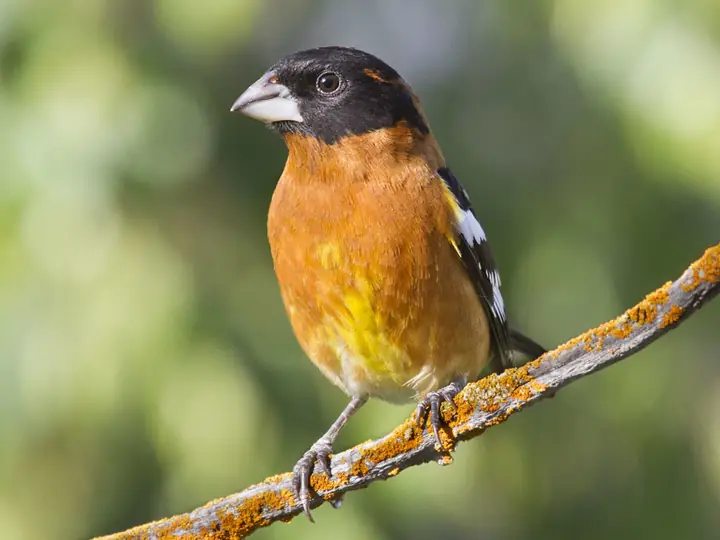
Black-headed Grosbeak
Pheucticus melanocephalus · Cardinals and Allies
Banding codeBHGR
Keys to identifying it
1Size & shape
About 7.3 in long.
2Color pattern
- Male: black head, cinnamon-orange chest and collar
- Bold black-and-white wings
- Huge pale conical bill
3Habitat & season
Canyon woodlands, scrub oak, shady yards
In northern Utah: summer.
Seen most often in May and June.
Share of the region’s research-grade iNaturalist bird observations each month, scaled to this bird’s peak. Highlighted bars are its peak months.
4Voice
Rich, robin-like song but sweeter and faster; a sharp 'eek' call.
“like a robin that took voice lessons”
iNat 169722673 by Dan Horowitz · Green Valley, CA 91390, USA · CC0
Know it
- One of the few birds that can eat toxic monarch butterflies in their Mexican wintering grounds.
- Both males and females sing, and both take turns incubating the eggs.
- A summer visitor that often sings from canyon maples and scrub oak.
Often confused with
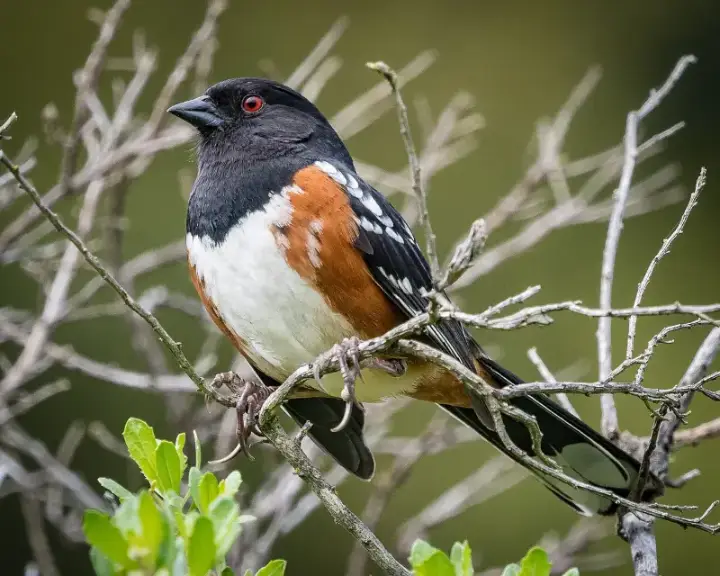 Spotted Towhee
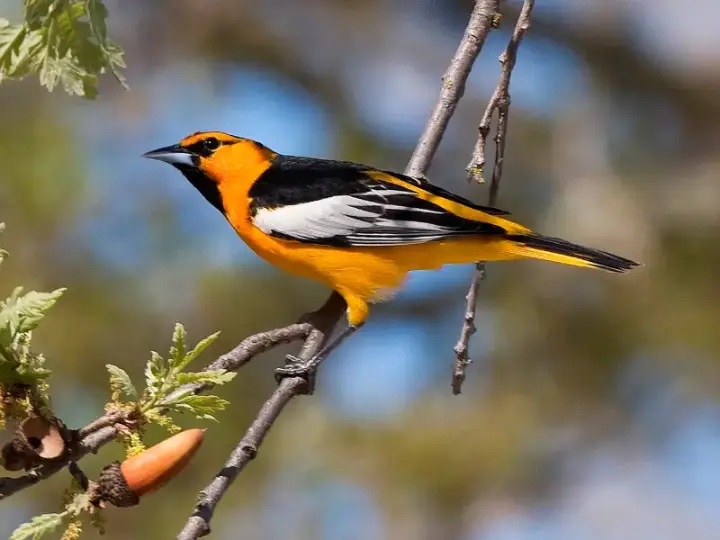 Bullock's Oriole
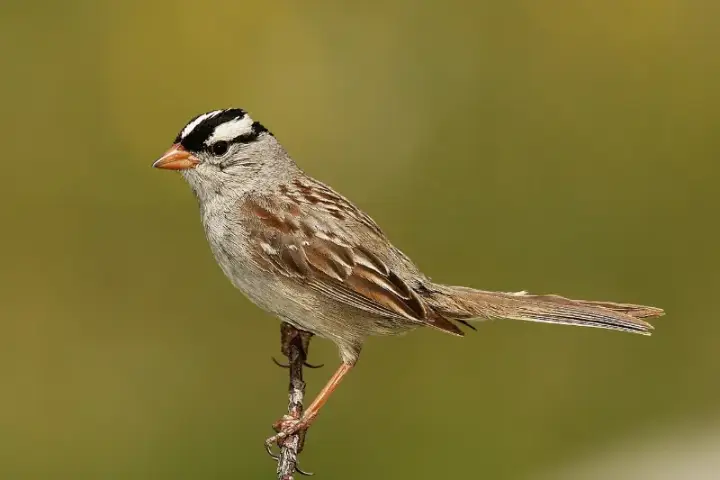 White-crowned Sparrow
- Evening Grosbeak
- Varied Thrush
From iNaturalist identification data for northern Utah.
From Wikipedia
The black-headed grosbeak is a medium-sized, seed-eating bird in the family Cardinalidae. It is sometimes considered conspecific with the rose-breasted grosbeak with which it hybridizes on the American Great Plains.
Wikipedia · CC BY-SA 4.0