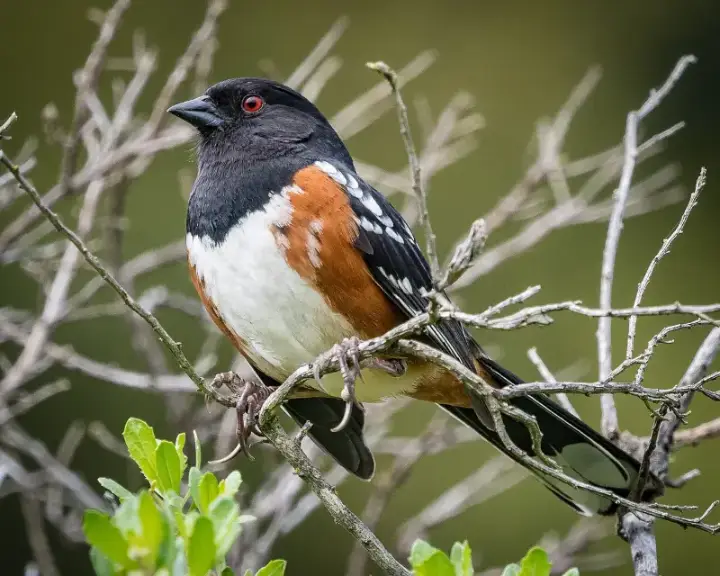
Spotted Towhee
Pipilo maculatus · New World Sparrows
Banding codeSPTO
Keys to identifying it
1Size & shape
About 7.5 in long.
2Color pattern
- Black hood and back with white spots
- Rusty-orange sides, white belly
- Red eye; long tail with white corners
3Habitat & season
Scrub oak, maple thickets, brushy foothills
In northern Utah: year-round.
Seen most often in May, June, October, December, January, February and March.
Share of the region’s research-grade iNaturalist bird observations each month, scaled to this bird’s peak. Highlighted bars are its peak months.
4Voice
A dry, buzzy trill; cat-like rising 'mew' call from the brush.
“chweeeeee (buzzy) and a cat-like 'mreee'”
iNat 220342649 by Michael Thaibinh · Hurricane, UT 84737, USA · CC BY
Know it
- Scratches for food with a two-footed backward hop in dry leaves.
- Its catlike 'mew' call often gives it away before you see it.
- Lives in Utah's scrub oak and brushy foothills year-round.
Often confused with
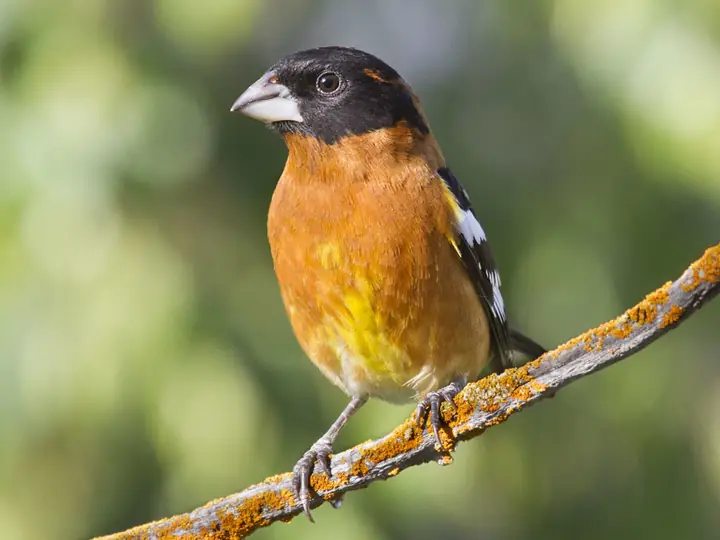 Black-headed Grosbeak
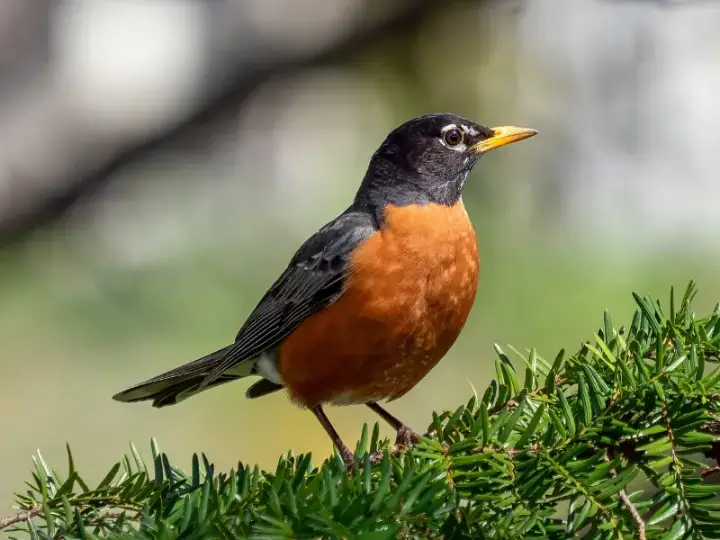 American Robin
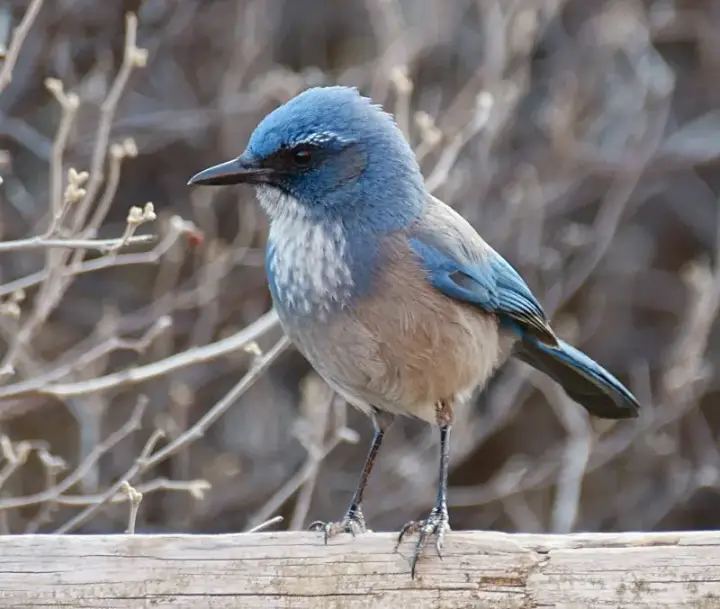 Woodhouse's Scrub-Jay
- Eastern Towhee
From iNaturalist identification data for northern Utah.
From Wikipedia
The spotted towhee is a large New World sparrow. The taxonomy of the towhees has been debated in recent decades, and until 1995 this bird and the eastern towhee were considered a single species, then named rufous-sided towhee. Another outdated name for the spotted towhee is the Oregon towhee. The call may be harsher and more varied than for the eastern towhee.
Wikipedia · CC BY-SA 4.0