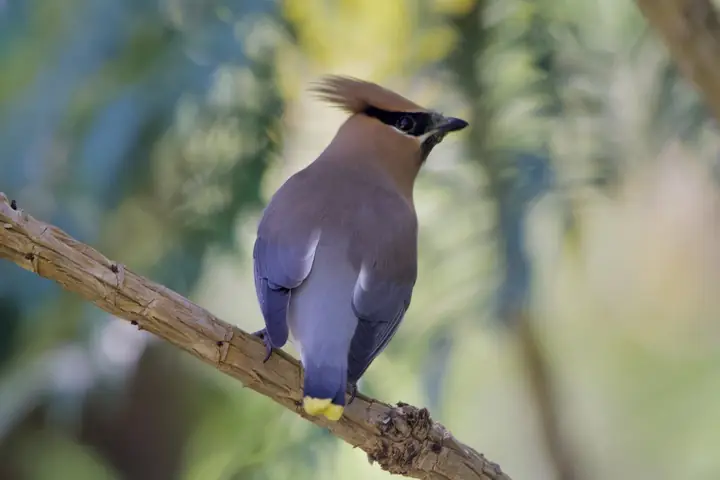
Cedar Waxwing
Bombycilla cedrorum · Waxwings
Banding codeCEDW
Keys to identifying it
1Size & shape
About 6.5 in long.
2Color pattern
- Sleek, crested, warm brown
- Black mask
- Yellow tail tip and red waxy wing tips
3Habitat & season
Fruiting trees, riparian corridors, parks
In northern Utah: year-round.
Seen most often in November, December, January, February and March.
Share of the region’s research-grade iNaturalist bird observations each month, scaled to this bird’s peak. Highlighted bars are its peak months.
4Voice
Very high, thin, lisping whistles — easy to miss.
“sreee (a whisper-thin whistle)”
iNat 73234915 by Hunter Hickok · Draper City Park, Draper, UT, US · CC BY
Know it
- Named for red, wax-like tips on some wing feathers.
- Can become intoxicated after gorging on fermented berries.
- Flocks sometimes pass a berry from bird to bird down a branch.
- Birds that ate non-native honeysuckle berries can have orange tail tips.
Often confused with
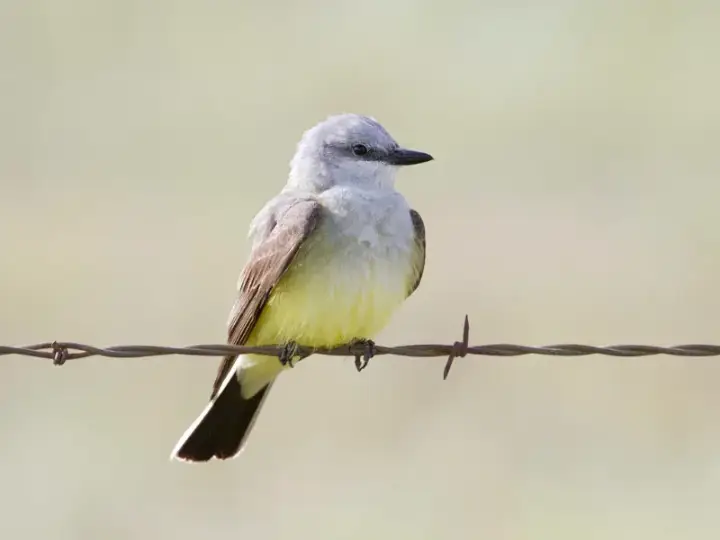 Western Kingbird
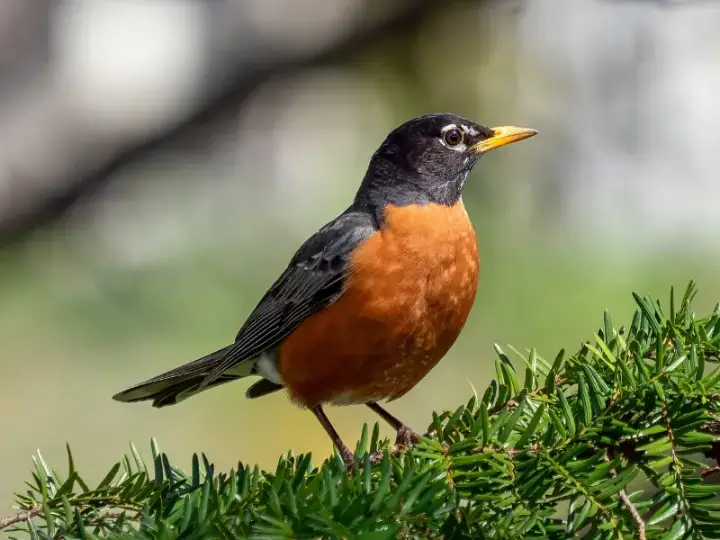 American Robin
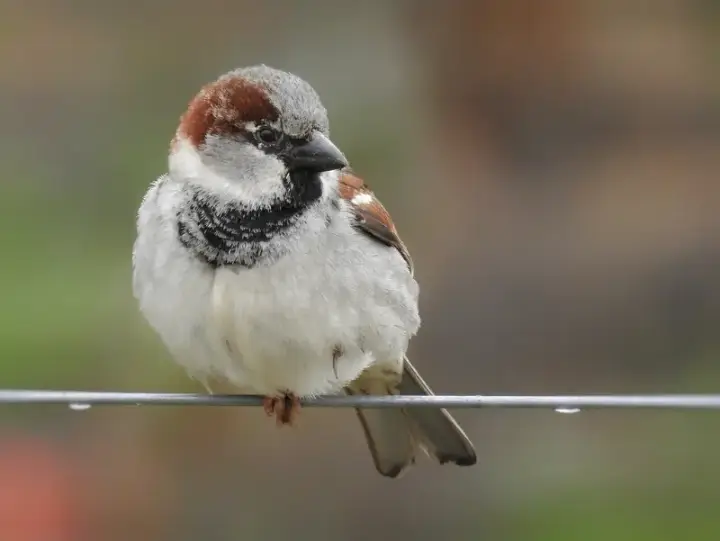 House Sparrow
- Bohemian Waxwing
From iNaturalist identification data for northern Utah.
From Wikipedia
The cedar waxwing is a member of the family Bombycillidae or waxwing family of passerine birds. It is a medium-sized bird that is mainly brown, gray, and yellow. Some of the wing feathers have red tips, which resemble sealing wax, giving the bird its common name. It is a native of North and Central America, breeding in open wooded areas in southern Canada and wintering in the southern half of the United States, Central America, and the far northwest of South America. Its diet includes cedar cones, fruit, holly berries, and insects. The cedar waxwing is listed as least concern on the IUCN Red List.
Wikipedia · CC BY-SA 4.0