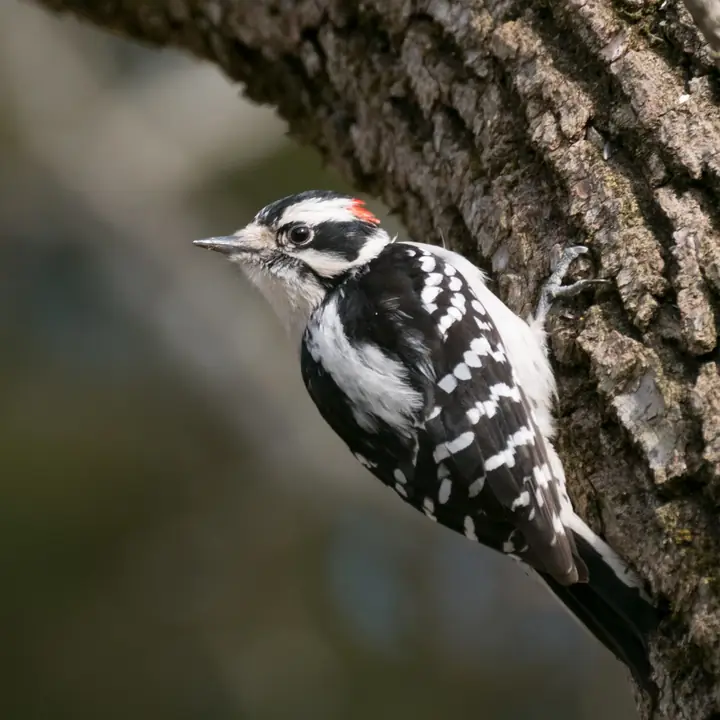
Downy Woodpecker
Dryobates pubescens · Woodpeckers
Banding codeDOWO
Keys to identifying it
1Size & shape
About 6 in long.
2Color pattern
- Small black-and-white woodpecker
- White stripe down the back
- Tiny bill much shorter than its head; males have a red nape spot
3Habitat & season
Shade trees, riparian woods, suet feeders
In northern Utah: year-round.
Seen most often in December and January.
Share of the region’s research-grade iNaturalist bird observations each month, scaled to this bird’s peak. Highlighted bars are its peak months.
4Voice
A soft, flat 'pik' and a descending whinny.
“pik! · a falling whinny”
iNat 280584019 by roy pilcher · The Gables, Rutland, VT, USA · CC0
Know it
- The smallest woodpecker in North America.
- Its bill is much shorter than its head — a Hairy Woodpecker's is nearly as long.
- In winter, males tend to forage on small twigs while females work larger branches.
Often confused with
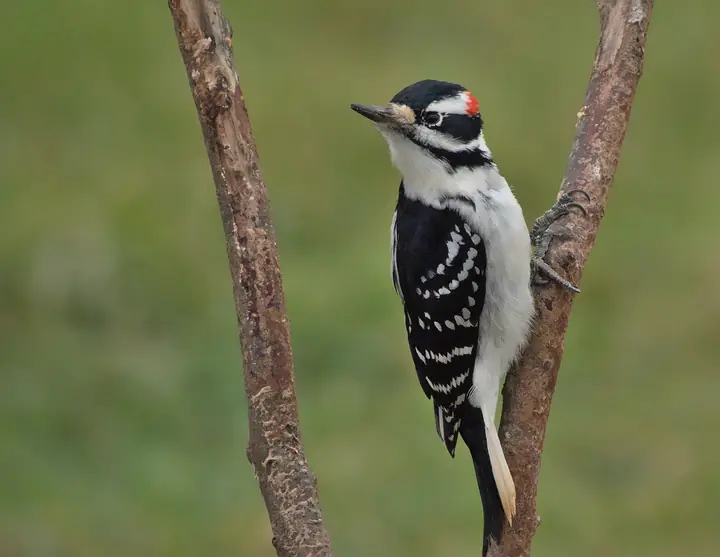 Hairy Woodpecker
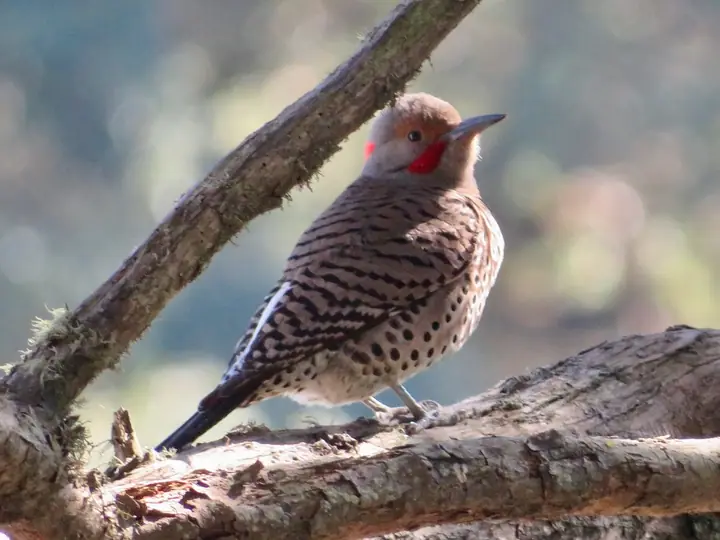 Northern Flicker
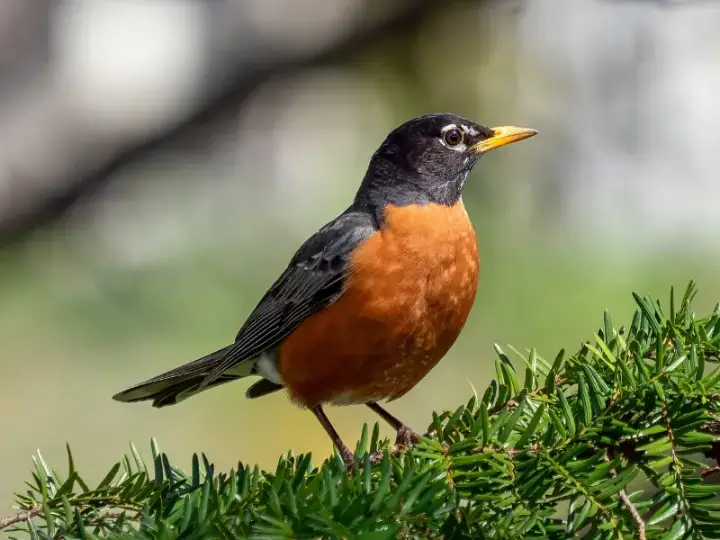 American Robin
- Red-cockaded Woodpecker
- Williamson's Sapsucker
From iNaturalist identification data for northern Utah.
From Wikipedia
The downy woodpecker is a species of woodpecker, the smallest in North America. Length ranges from 14 to 18 cm. Downy woodpeckers primarily live in forested areas throughout the United States and Canada, with the exception of deserts in the southwest and the northern tundra. The bird nests in tree cavities and feeds primarily on insects, although it supplements its diet with seeds and berries. The downy woodpecker is very similar in appearance to the hairy woodpecker, although they are not closely related.
Wikipedia · CC BY-SA 4.0