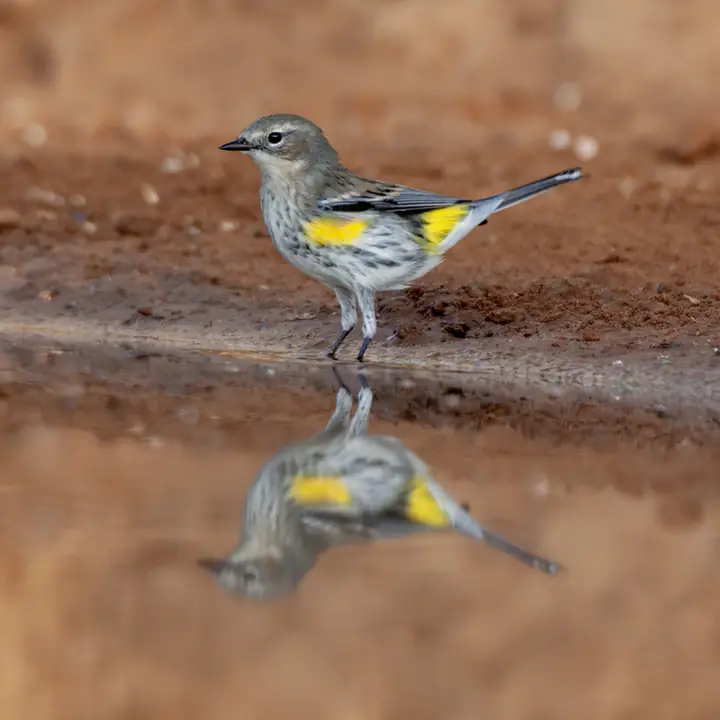
Yellow-rumped Warbler
Setophaga coronata · New World Warblers
Banding codeYRWA
Keys to identifying it
1Size & shape
About 5.25 in long.
2Color pattern
- Bright yellow rump patch
- Yellow patches on the sides
- Western birds have a yellow throat
3Habitat & season
Mountain conifers in summer; riparian trees and berry bushes in winter
In northern Utah: year-round.
Seen most often in January, May, September and October.
Share of the region’s research-grade iNaturalist bird observations each month, scaled to this bird’s peak. Highlighted bars are its peak months.
4Voice
A loose, warbling trill; a sharp 'chek' call.
“a sweet, rambling trill · chek!”
iNat 80556558 by Robbie Hannawacker · San Juan County, US-UT, US · CC0
Know it
- Nicknamed 'butter-butt' for its yellow rump.
- One of the few warblers that regularly spends the winter in northern Utah.
- Western birds have a yellow throat; eastern birds have a white one.
- Catches insects in midair and also eats berries — unusually flexible for a warbler.
Often confused with
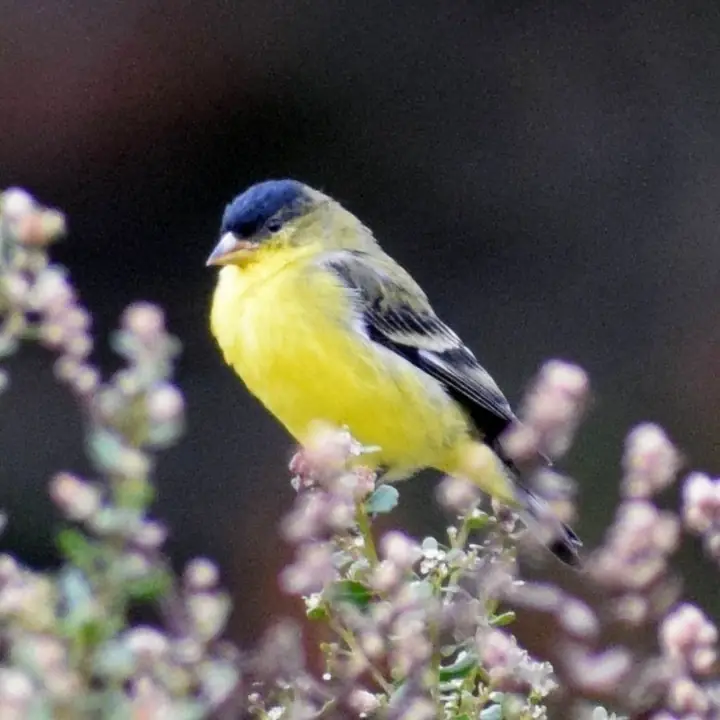 Lesser Goldfinch
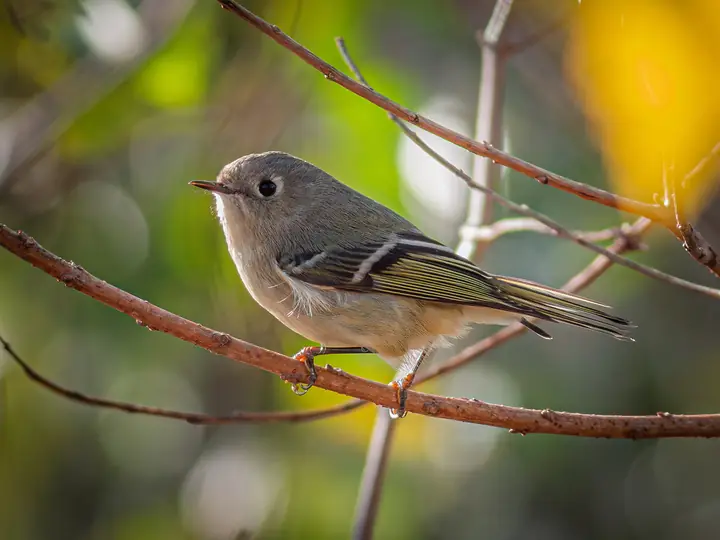 Ruby-crowned Kinglet
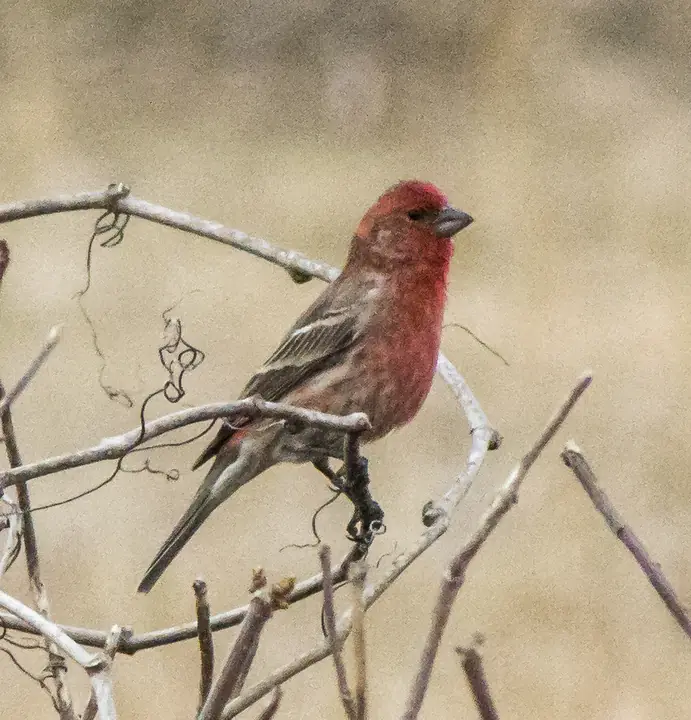 House Finch
- Grace's Warbler
- Virginia's Warbler
From iNaturalist identification data for northern Utah.
From Wikipedia
The yellow-rumped warbler is a North American bird species that can be commonly observed all across the continent. Its extensive range connects both the Pacific and Atlantic coasts of the U.S. as well as Canada and Central America, with the population concentrated in the continent's northern reaches during the breeding season and migrating southwards to southern North and Central America in the winter. It generally prefers coniferous forests or mixed coniferous-deciduous forests as its breeding habitat, while during the winter it can be found inhabiting more open areas such as shrublands that offer food resources. The yellow-rumped warbler is primarily insectivorous, though the species eats fruit such as juniper berries, especially in winter.
Wikipedia · CC BY-SA 4.0