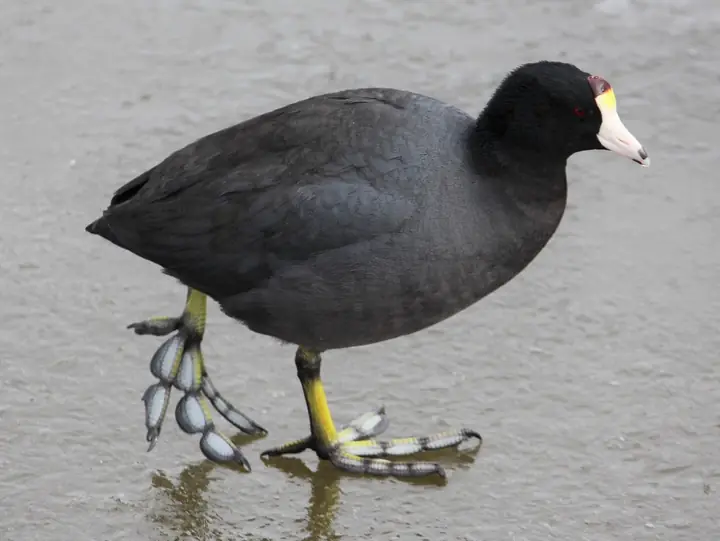
American Coot
Fulica americana · Rails, Gallinules, and Coots
Banding codeAMCO
Keys to identifying it
1Size & shape
About 15.5 in long.
2Color pattern
- Charcoal-black and chicken-shaped
- White bill and forehead shield
- Red eye; lobed green toes
3Habitat & season
Ponds, marshes, park lakes
In northern Utah: year-round.
Seen most often in November, December, January, February, March and April.
Share of the region’s research-grade iNaturalist bird observations each month, scaled to this bird’s peak. Highlighted bars are its peak months.
4Voice
Grunts, clucks, and cackling calls.
“puhk-lik, puhk-lik”
iNat 40339205 by Thomas Koffel · Douglas County, KS, USA · CC BY
Know it
- Not a duck at all — it's related to rails and cranes.
- Has lobed toes instead of webbed feet.
- Runs across the water's surface, flapping, to take off.
Often confused with
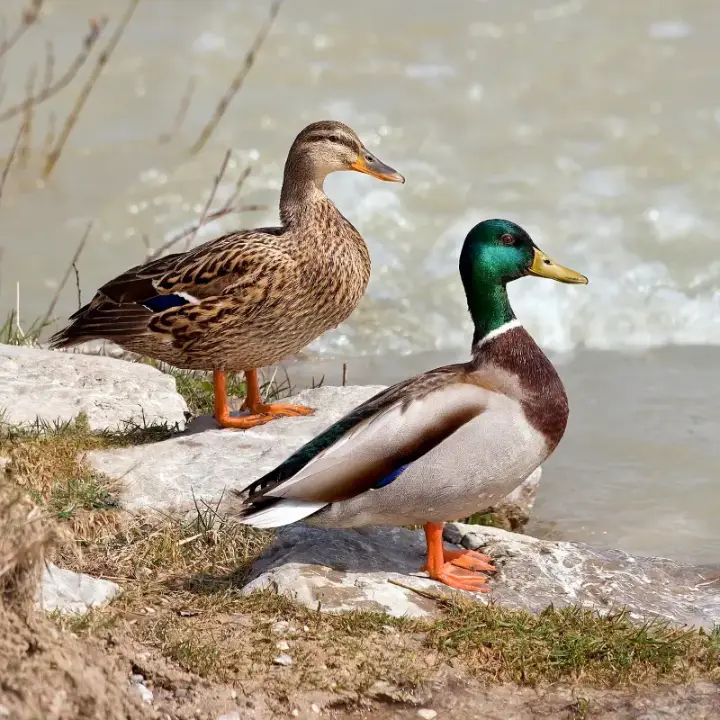 Mallard
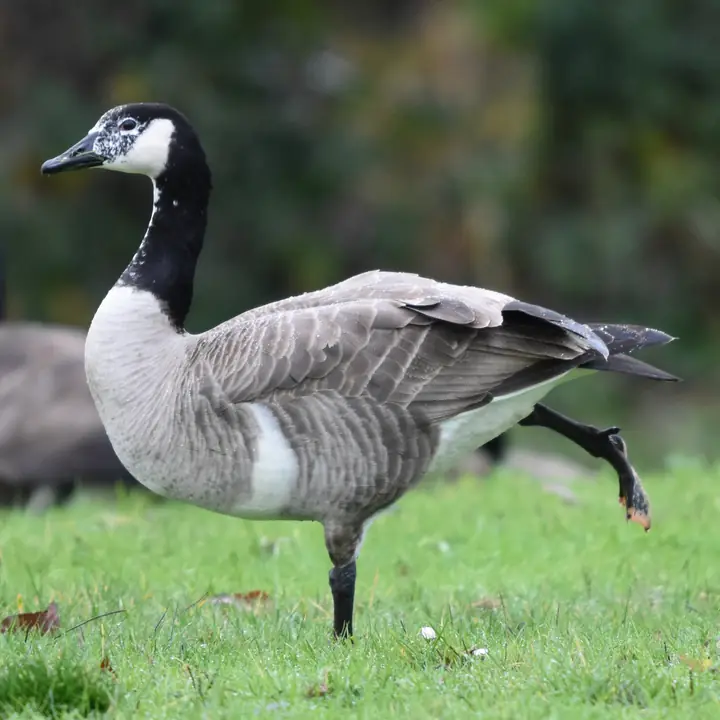 Canada Goose
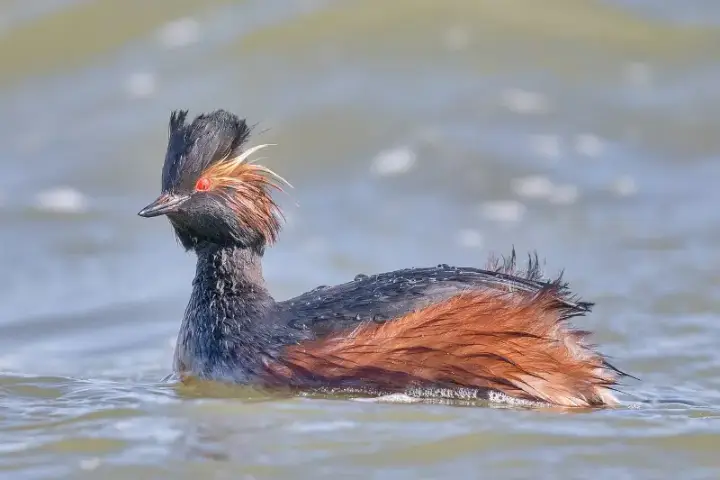 Eared Grebe
- Eurasian Coot
- Slate-colored Coot
From iNaturalist identification data for northern Utah.
From Wikipedia
The American coot, also known as a mud hen or pouldeau, is a bird of the family Rallidae. Though commonly mistaken for ducks, American coots are only distantly related to ducks, belonging to a separate order. Unlike the webbed feet of ducks, coots have broad, lobed scales on their lower legs and toes that fold back with each step to facilitate walking on dry land. Coots live near water, typically inhabiting wetlands and open water bodies in North America. Groups of coots are called covers or rafts. The oldest known coot lived to be 22 years old.
Wikipedia · CC BY-SA 4.0