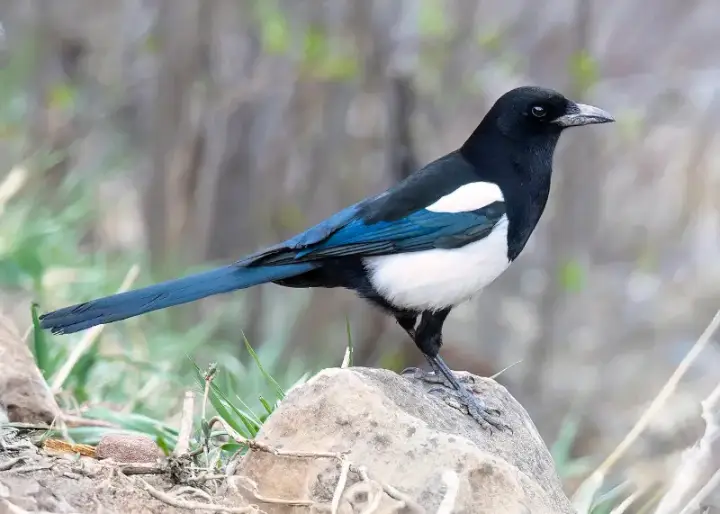
Black-billed Magpie
Pica hudsonia · Crows, Jays, and Magpies
Banding codeBBMA
Keys to identifying it
1Size & shape
About 20 in long.
2Color pattern
- Black and white with a very long tail
- Blue-green iridescent wings and tail
- Heavy black bill
3Habitat & season
Towns, farms, riparian thickets, sagebrush edges
In northern Utah: year-round.
Seen most often in March, April, August, October, November and December.
Share of the region’s research-grade iNaturalist bird observations each month, scaled to this bird’s peak. Highlighted bars are its peak months.
4Voice
Harsh, rapid chatter and questioning nasal calls.
“chek-chek-chek-chek”
iNat 284993313 by Mara · Ada County, ID, USA · CC BY
Know it
- Builds a big domed stick nest with a side entrance.
- Calls loudly when it finds a dead member of its species, drawing others into a noisy gathering.
- Hides food in the ground and sometimes makes fake caches to fool thieves.
- Lands on deer, elk and moose to pick ticks off their backs.
- Was split from its Eurasian look-alike as a separate species in 2000 based on genetics.
Often confused with
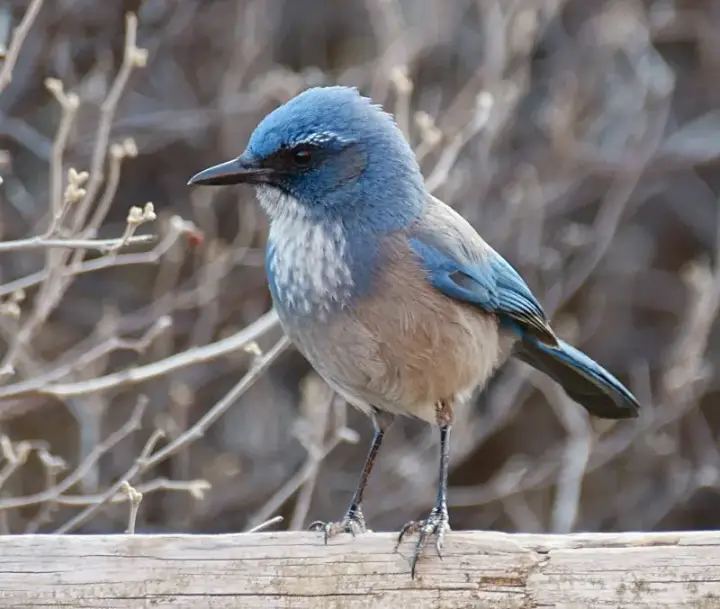 Woodhouse's Scrub-Jay
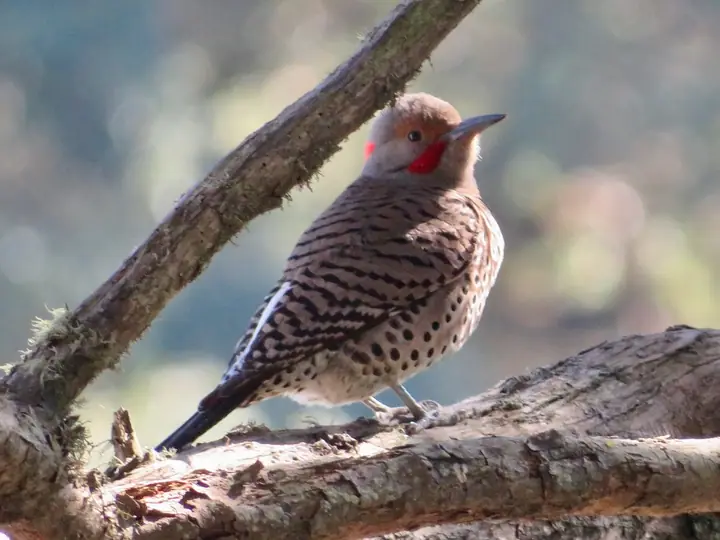 Northern Flicker
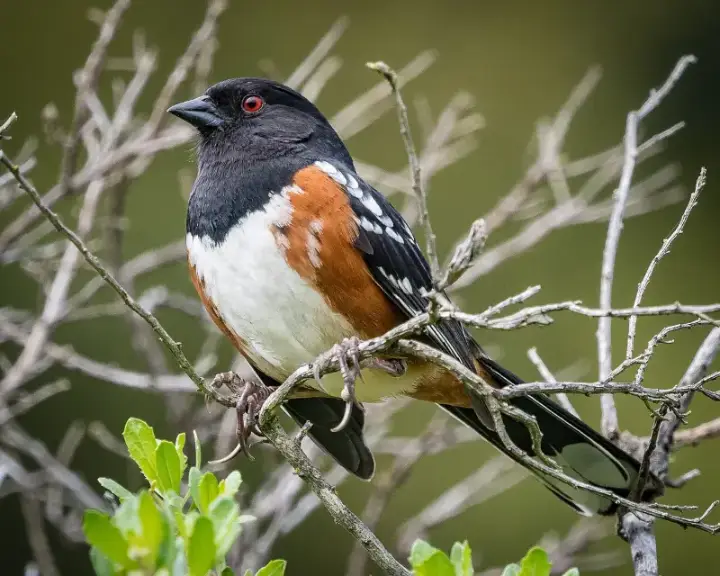 Spotted Towhee
- Oriental Magpie
- Maghreb Magpie
From iNaturalist identification data for northern Utah.
From Wikipedia
The black-billed magpie, also known as the American magpie, is a bird in the corvid family found in the western half of North America. It is black and white, with the wings and tail showing black areas and iridescent hints of blue and blue-green. It was formerly treated as a subspecies of Pica pica, but was separated as a species in its own in 2000 based on genetic studies.
Wikipedia · CC BY-SA 4.0