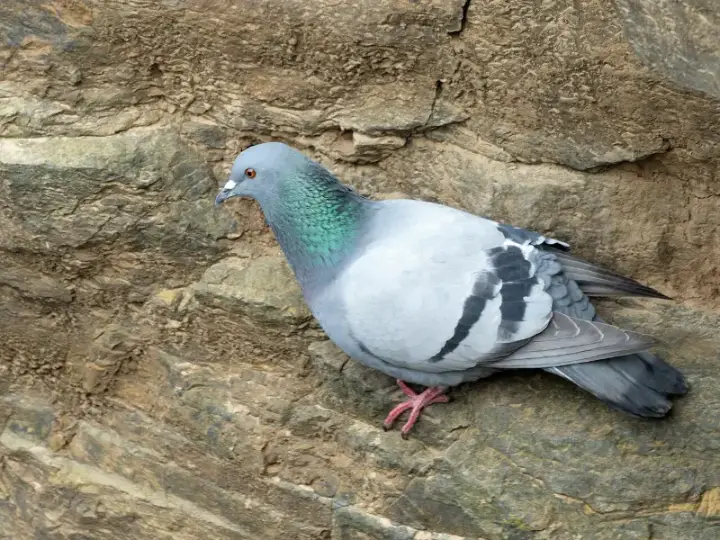
Rock Pigeon
Columba livia · Pigeons and Doves
Banding codeROPI
Keys to identifying it
1Size & shape
About 13 in long.
2Color pattern
- Chunky with a small head
- Two black bars across gray wings
- Iridescent green-purple neck; colors vary widely
3Habitat & season
Cities, bridges, farms, canyon cliffs
In northern Utah: year-round.
Seen most often in February, March, April, November and December.
Share of the region’s research-grade iNaturalist bird observations each month, scaled to this bird’s peak. Highlighted bars are its peak months.
4Voice
Soft, throaty, gurgling coos.
“a rolling 'coo-roo-coo'”
iNat 59278950 by Richard Littauer · Montpelier, VT 05602, USA · CC BY
Know it
- Descends from wild cliff-nesting birds — city buildings stand in for cliffs.
- Brought to North America by European settlers in the early 1600s.
- Its homing skill has carried messages for thousands of years, including in both World Wars.
- Feeds its young 'crop milk' and can breed in any month of the year.
Often confused with
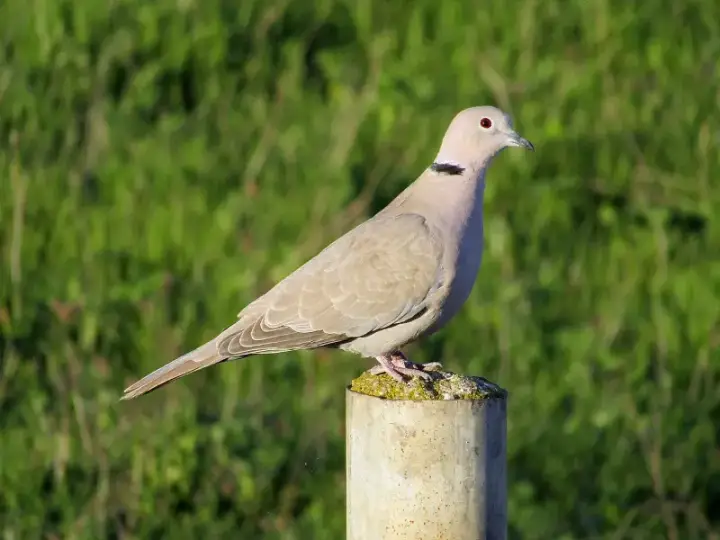 Eurasian Collared-Dove
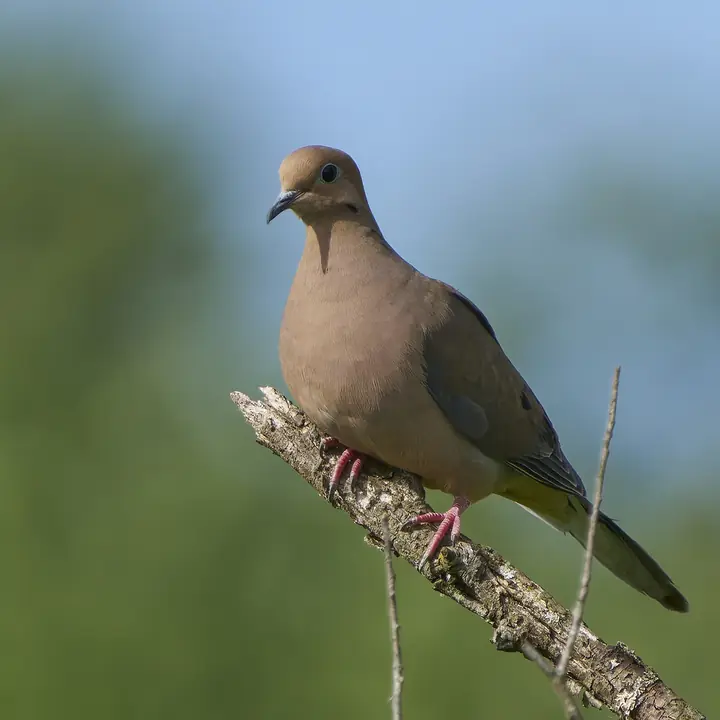 Mourning Dove
 European Starling
- American Barn Owl
From iNaturalist identification data for northern Utah.
From Wikipedia
The rock dove, also known as the common pigeon or rock pigeon, is a member of the bird family Columbidae. In common usage, it is often simply referred to as the "pigeon", although the rock dove is the wild form of the bird; the pigeons familiar to most people are the domesticated forms of the wild rock dove.
Wikipedia · CC BY-SA 4.0